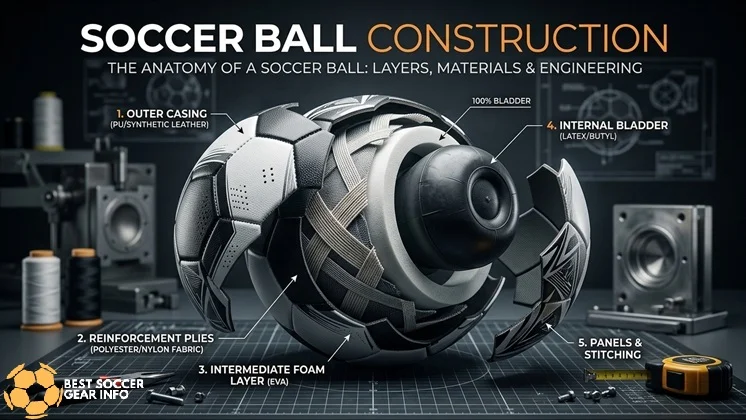
A modern soccer ball is a layered, inflatable sphere made from an outer cover, backing layers, a bladder, and a valve. Its construction varies by ball, but manufacturers commonly use polyurethane (PU) or thermoplastic polyurethane (TPU) for the outer surface, synthetic textile layers underneath, and either a butyl or latex bladder. The panels may be machine-stitched, hand-stitched, glued, or thermally bonded, depending on the ball’s intended use and price level.
The construction matters because it affects touch, shape retention, water resistance, durability, rebound, flight consistency, and how the ball feels when kicked.
FIFA’s football testing program evaluates finished balls for characteristics including weight, circumference, roundness, bounce, water absorption, pressure loss, and shape and size retention.
What Is a Soccer Ball Made Of?
A soccer ball is not simply a hollow shell filled with air. It is a multi-layer construction in which different materials perform different jobs.
The main parts are:
- Outer cover — the surface players touch.
- Textile or backing layers — reinforce the cover and help maintain shape.
- Panel structure — determines how the outer shell is assembled.
- Bladder — holds the air.
- Valve — allows the ball to be inflated.
- Adhesive, thread, or bonded seams — connect the construction together.
A simplified cross-section looks like this:
Outer texture/cover → backing layers → structural panel assembly → bladder → air
Not every soccer ball uses exactly the same materials or number of layers. Construction changes according to the manufacturing method and the ball’s intended level of play.
Soccer Ball Construction Diagram
A useful way to understand soccer ball construction is to imagine cutting the ball in half.
| Part | Where it is | Main purpose |
| Outer cover | Outside | Provides the playing surface and protects the inner construction |
| Textured surface | Outer surface | Influences grip, touch, and interaction with the ball |
| Backing/lining | Beneath cover | Adds strength and helps maintain shape |
| Panels | Form the outer shell | Create the spherical structure |
| Seams/bonded joints | Between panels | Hold panels together |
| Bladder | Inside | Holds compressed air |
| Valve | Connected to bladder | Allows inflation and air retention |
The exact layer arrangement differs among manufacturers and models.
For example, the current adidas FIFA World Cup 26 Trionda Pro uses a polyurethane outer material, textile inner materials, a thermally bonded seamless construction, and a butyl bladder.
Parts of a Soccer Ball
1. Outer Cover
The outer cover is the part that your foot, head, or other legal contact surface actually interacts with.
Modern soccer balls commonly use polyurethane (PU) or related synthetic materials rather than natural leather.
The cover can be manufactured with different textures. A textured surface can be designed to influence touch and interaction with the ball.
The cover also has to withstand repeated impacts, friction against playing surfaces, moisture, and deformation.
2. Backing and Lining Layers
Underneath the outer cover are reinforcement layers.
These layers can contain textile materials such as polyester or other synthetic fibers. Their job is not simply cosmetic. They contribute to:
- structural stability
- shape retention
- durability
- consistent response
- support for the outer panels
Some premium balls use several carefully engineered layers rather than relying on the outer cover alone.
3. Panels
Panels are the individual pieces that make up the ball’s outer shell.
The familiar traditional soccer ball has 32 panels: 12 pentagons and 20 hexagons. The famous adidas Telstar used this configuration and was first used at the 1970 FIFA World Cup.
However, 32 panels is not a universal requirement for modern soccer balls.
Modern manufacturers have experimented with different panel counts and shapes. For example, adidas states that its 2022 Al Rihla World Cup ball used 20 panels, while the 2026 Trionda Pro uses a four-panel design.
So when someone asks, “How many panels does a soccer ball have?” the answer is:
It depends on the ball’s design. The traditional construction has 32 panels, but modern soccer balls can use substantially fewer panels.
Why Do Soccer Balls Have Panels?
Panels allow a manufacturer to construct a flexible, approximately spherical shell from separate pieces of material.
The geometry of the traditional 32-panel design is closely related to a truncated icosahedron, a geometric solid containing 12 pentagonal faces and 20 hexagonal faces.
But modern soccer balls do not need to reproduce that geometry.
Advances in materials and manufacturing allow manufacturers to use fewer, differently shaped panels while still producing a spherical ball.
This is why panel count alone is not a reliable measure of ball quality.
Soccer Ball Construction Materials
The materials used in a soccer ball depend on the model and construction method.
| Material/component | Common role |
| Polyurethane (PU) | Outer cover |
| Thermoplastic polyurethane (TPU) | Outer cover or synthetic construction material |
| Polyester | Backing/reinforcement |
| Rayon or similar textile fibers | Reinforcement in some premium constructions |
| Butyl rubber | Bladder |
| Latex | Bladder in some balls |
| Adhesives | Bonding panels/layers |
| Thread | Stitching panels together |
| Rubber | Bladder and valve components |
A current adidas professional ball, for example, lists polyurethane together with recycled polyester/rayon-type inner materials and uses thermal bonding for its construction.
Another current adidas ball uses a polyurethane cover, recycled polyester inner material, machine stitching, and a butyl bladder.
That illustrates an important point: there is no single material recipe for every soccer ball.
Leather Soccer Ball Construction
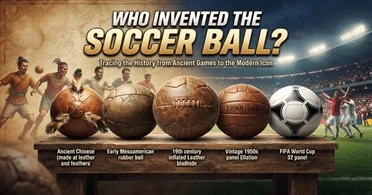
Leather was historically used for soccer balls, particularly before modern synthetic materials became dominant.
Traditional leather balls were constructed from stitched leather panels around an inflatable inner bladder.
The famous 1970 Telstar, for example, was made from leather and used 32 hand-stitched panels consisting of 12 black pentagons and 20 white hexagons.
Modern match balls generally use synthetic materials because manufacturers can engineer properties such as water resistance, consistency, durability, texture, and weight more precisely.
Therefore, when comparing leather soccer ball construction vs. modern soccer ball construction, the major difference is not simply appearance. The materials and manufacturing processes themselves have changed substantially.
Soccer Ball Construction Methods
There are four construction methods you are most likely to encounter.
1. Machine-Stitched Construction
Machine stitching uses a machine to sew the panels together.
It is common on many training, recreational, and lower-priced soccer balls.
Advantages
- efficient manufacturing
- generally durable
- relatively affordable
- suitable for regular practice
Disadvantages
- visible seams
- different feel from a seamless thermally bonded ball
- construction quality depends on the materials and stitching
A current adidas recreational ball, for example, uses a machine-stitched construction with a polyurethane cover and butyl bladder.
2. Hand-Stitched Construction
Hand stitching connects the panels manually.
It was particularly associated with traditional premium soccer-ball construction.
Hand stitching can create strong panel connections, but it is labor-intensive compared with automated manufacturing.
The classic 1970 Telstar is an example of a leather ball made with hand-stitched panels.
3. Thermally Bonded Construction
Thermal bonding joins panel sections using heat rather than relying primarily on conventional stitching.
This method is now used in many high-end match balls.
A current adidas FIFA World Cup 26 Trionda Pro, for example, uses a thermally bonded seamless construction and a butyl bladder.
Thermally bonded construction can provide a very consistent exterior surface. Manufacturers also use it to reduce exposed stitching and control water absorption.
adidas describes its current professional thermally bonded balls as having seamless construction designed to support predictable trajectory and reduced water absorption.
4. Glued or Adhesively Bonded Construction
Adhesives can be used to join layers or panels.
Some balls combine adhesive bonding with other construction techniques rather than relying on one method exclusively.
For example, adidas has described earlier thermally bonded footballs as using panels bonded with adhesive to produce a seamless surface.
Traditional vs. Modern Soccer Ball Construction
| Feature | Traditional construction | Modern construction |
| Outer material | Leather was common historically | Synthetic materials such as PU/TPU are common |
| Panel design | Often 32 panels | Panel counts and shapes vary widely |
| Famous geometry | 12 pentagons + 20 hexagons | Multiple geometric designs |
| Joining method | Hand stitching was common | Machine stitching, bonding, and thermal bonding |
| Surface | Generally stitched leather | Engineered synthetic/textured surfaces |
| Water behavior | Leather could absorb water | Modern designs can be engineered for lower water absorption |
| Manufacturing | More labor-intensive | Greater use of automated and engineered manufacturing |
| Performance design | Relatively traditional | Highly engineered for touch, flight, shape retention, and durability |
The transition from traditional to modern construction is one reason it is misleading to assume that every soccer ball should have 32 panels.
How Many Panels Does a Soccer Ball Have?
There is no single panel count for every soccer ball.
The classic answer is 32 panels:
- 12 pentagons
- 20 hexagons
- 32 total
That configuration is strongly associated with the traditional soccer-ball design and the 1970 Telstar.
Modern balls can use different designs.
For example:
- Telstar: 32 panels
- adidas Al Rihla: 20 panels
- adidas Trionda Pro: four-panel design
These examples demonstrate how dramatically panel construction has evolved.
Does fewer panels mean a better soccer ball?
No.
Panel count is only one aspect of construction. The materials, panel geometry, surface texture, bonding or stitching, internal reinforcement, bladder, and manufacturing precision also affect how a ball performs.
Soccer Ball Construction Layers
A soccer ball can be understood as a series of functional layers.
Layer 1: Playing surface
This is the textured outer material.
It provides the contact surface for passing, dribbling, shooting, and receiving.
Layer 2: Reinforcement
Textile layers beneath the cover provide additional structural support.
Layer 3: Panel structure
The outer construction is divided into panels or panel-like sections.
Layer 4: Joining system
The sections are stitched, glued, thermally bonded, or joined using a combination of techniques.
Layer 5: Bladder
The bladder is the inflatable inner chamber.
Layer 6: Air
The air inside the bladder gives the ball its inflated form and contributes to its rebound and response.
What Is a Soccer Ball Bladder?
The bladder is the inflatable chamber inside the ball.
Its primary job is to hold the air that gives the ball its pressure and shape.
Two common bladder materials are:
Butyl bladder
Butyl bladders are widely used because they provide good air retention.
They are common in training and recreational balls and are also used in some higher-level balls. Current adidas examples include balls with butyl bladders in both recreational and professional-oriented products.
Latex bladder
Latex bladders are also used in some soccer balls.
They can provide a responsive feel, although air retention characteristics differ from butyl.
The choice between bladder materials therefore affects maintenance and playing characteristics.
How Soccer Ball Construction Affects Performance
Construction influences several characteristics players notice on the field.
Touch
The outer cover and its texture affect how the ball feels when receiving or striking it.
Flight
Panel geometry, surface texture, roundness, and construction consistency can influence how the ball travels through the air.
FIFA notes that even small flaws can influence how a football flies and rolls.
Shape Retention
A quality ball should remain close to its intended spherical shape during repeated use.
This is one reason professional balls undergo shape and size retention testing.
Water Resistance
Water can affect a ball’s behavior and weight.
Modern seamless constructions can be designed to reduce water uptake. adidas specifically describes this as a benefit of its thermally bonded professional balls.
Durability
The cover, backing, seams, bonding system, bladder, and valve all contribute to how well a ball withstands repeated use.
Soccer Ball Construction and the Physics of Kicking
Construction also connects to the physics of a kicked soccer ball.
When a player kicks the ball, several things happen:
- The foot applies force to the ball.
- The ball temporarily deforms.
- Energy is transferred into the ball.
- The ball leaves the foot with velocity.
- Spin can be produced when the force is applied away from the ball’s center.
- Airflow interacts with the moving and spinning ball.
The ball’s surface and construction influence how consistently it behaves, but construction alone does not determine the complete trajectory. Kick speed, launch angle, spin, air conditions, and the point of contact also matter.
This is why a soccer ball’s construction is connected to performance without being the only factor responsible for it.
Soccer Ball Construction History
Soccer-ball construction has changed considerably over time.
Early footballs were constructed using leather panels around an inflatable bladder. Later designs experimented with panel arrangements and synthetic materials.
The 1970 Telstar became one of the most recognizable constructions because of its 32-panel design: 12 black pentagons and 20 white hexagons. The black-and-white pattern was also designed to improve visibility on television.
Modern manufacturers have moved toward engineered synthetic covers, specialized textures, fewer or differently shaped panels, and advanced joining techniques.
The result is that today’s professional balls can look very different from the traditional 32-panel ball while still fulfilling the same fundamental purpose.
Standard Soccer Ball Construction
There is no single construction method that every standard soccer ball must use.
The Laws of the Game establish requirements for match balls, while FIFA’s quality program adds testing requirements for balls carrying FIFA quality marks.
FIFA’s football quality testing includes:
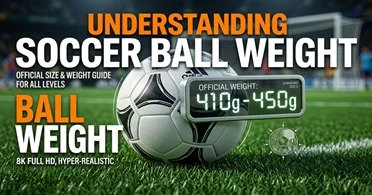
- weight
- circumference
- roundness
- bounce
- water absorption
- pressure loss
- shape and size retention
Balls that pass the relevant requirements can receive FIFA quality marks, including FIFA Quality and FIFA Quality Pro.
Therefore, “standard construction” should not be interpreted as “every ball must have 32 panels.”
What Is the Best Soccer Ball Construction?
There is no single construction that is best for every use.
A player choosing a ball should consider the intended purpose.
| Use | Construction characteristics to consider |
| Professional match play | High-quality cover, consistent shape, engineered surface, premium bonding/stitching |
| Competitive matches | Durable construction and reliable flight |
| Training | Durability, air retention, and value |
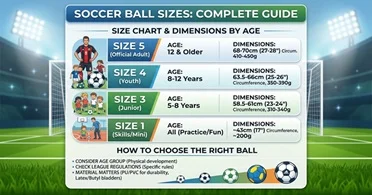
| Youth practice | Appropriate size plus durable construction |
| Recreational play | Durability and affordability |
| Wet conditions | Water-resistant cover and construction |
| Frequent outdoor use | Durable cover and reliable seams/bonding |
For a match ball, certification can provide useful information because FIFA’s quality marks indicate that the ball has passed defined testing requirements.
Does Panel Shape Affect a Soccer Ball?
Yes, but panel shape should be considered as part of the complete construction rather than in isolation.
Panel geometry affects:
- seam arrangement
- surface characteristics
- manufacturing method
- symmetry
- how the outer shell is assembled
Modern balls demonstrate that different panel designs can be engineered successfully. The traditional 32-panel construction is therefore one solution, not the only solution.
Why Are Modern Soccer Balls Not All 32 Panels?
Technology has changed the way manufacturers construct balls.
Modern synthetic materials can be cut into complex shapes and joined using sophisticated bonding systems. This gives manufacturers more freedom to design the shell without depending on the traditional pentagon-and-hexagon arrangement.
The 2026 adidas Trionda Pro is a current example: adidas describes it as having a four-panel design with thermally bonded seamless construction.
Soccer Ball Construction PDF
If you are looking for a soccer ball construction PDF, there is no single universal PDF that defines the construction of every soccer ball.
Construction varies between manufacturers and models.
For technical or standards-based information, FIFA’s football quality-program resources are more useful than a generic construction diagram because FIFA publishes the testing framework used for certified footballs.
For educational purposes, the basic construction can be summarized as:
Outer cover → reinforcement layers → panels/joints → bladder → valve → air
FAQs-Common Soccer Ball Construction Questions
A traditional soccer ball has 32 panels: 12 pentagons and 20 hexagons. Modern soccer balls can use different panel counts, including 20-panel and four-panel designs.
Modern soccer balls commonly use synthetic materials such as polyurethane or thermoplastic polyurethane for the outer construction, along with textile reinforcement and a rubber bladder. Exact materials vary by model.
Traditional soccer balls were made from leather. Modern match and training balls commonly use synthetic materials instead. The historic Telstar, for example, was leather.
Inside the outer shell is a bladder that holds air. Reinforcement layers may sit between the outer cover and bladder.
The bladder is the inflatable inner chamber that stores the air. Butyl and latex are common bladder materials.
They can be either. Soccer balls may be machine-stitched, hand-stitched, glued, thermally bonded, or constructed using combinations of these methods.
It is a ball whose panels are joined using a heat-based bonding process rather than relying primarily on conventional stitching. Many modern premium match balls use thermally bonded construction.
Not necessarily. A 32-panel design is a traditional construction, but modern balls use different panel configurations successfully. Overall performance depends on the complete construction.
The classic 32-panel design uses 12 pentagons and 20 hexagons. This arrangement is associated with the geometry of a truncated icosahedron and provides a way to form a roughly spherical shell.
Traditional balls commonly relied on leather and stitched panels. Modern balls generally use engineered synthetic materials and may use machine stitching, adhesive bonding, or thermal bonding, with panel designs that can be very different from the classic 32-panel arrangement.
Yes. Shape, surface texture, panel arrangement, and construction consistency can influence flight behavior. FIFA’s testing program therefore evaluates characteristics such as roundness, bounce, and shape retention.
The Bottom Line
Soccer ball construction is a combination of materials, layers, panel geometry, joining methods, bladder technology, and surface engineering.
The classic 32-panel ball remains important because of its distinctive 12-pentagon/20-hexagon design, but it is no longer the standard design for every modern soccer ball. Today’s balls can use fewer panels, complex shapes, synthetic covers, reinforced layers, and thermally bonded seamless construction.
When evaluating a soccer ball, look beyond the panel count. Cover material, surface texture, construction method, bladder, shape retention, durability, and quality certification provide a much more complete picture of how the ball is constructed and how it is intended to perform.