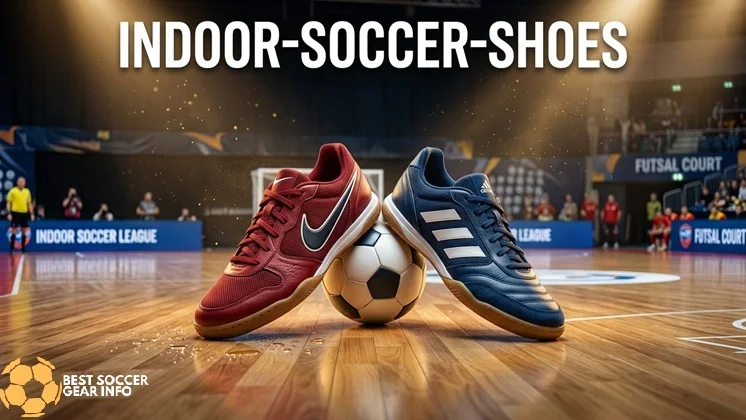
Indoor soccer shoes are designed for playing on flat, hard indoor courts. They use a flat, non-marking rubber outsole that provides grip without the protruding studs found on outdoor soccer cleats. The right pair should match your playing surface, fit securely, and provide enough cushioning and ball control for your style of play.
If you play indoor soccer on a smooth gym floor, a dedicated indoor soccer shoe is generally the appropriate choice. Turf shoes are designed for artificial turf, while firm-ground cleats are intended for natural grass. Choosing the wrong outsole can reduce traction and may damage the playing surface.
What Are Indoor Soccer Shoes?
Indoor soccer shoes are low-profile soccer footwear made for hard, flat playing surfaces. They are also commonly called indoor soccer sneakers, indoor football shoes, or futsal shoes, depending on the sport and region.
Unlike outdoor cleats, indoor soccer shoes typically have a flat rubber outsole without detachable or molded studs. Their construction allows players to move, stop, turn, and control the ball on indoor courts.
What Makes Indoor Soccer Shoes Different?
| Feature | Indoor soccer shoes |
| Outsole | Flat, non-marking rubber |
| Playing surface | Smooth indoor courts, gym floors, and suitable futsal courts |
| Traction | Rubber grip across the outsole |
| Ball control | Low-profile construction for close touches |
| Studs | No traditional outdoor soccer studs |
| Typical fit | Secure, comfortable fit with room for natural toe movement |
Indoor shoes can resemble regular sneakers, but their outsole, construction, and intended use are different. Some models have a suede or synthetic upper, while others use lightweight mesh or synthetic leather.
Indoor Soccer Shoes vs. Other Soccer Footwear
The playing surface is the most important distinction. A shoe that works well on artificial turf may not provide the same grip on a polished gym floor.
| Shoe type | Intended surface | Outsole |
| Indoor soccer shoes (IN) | Flat indoor courts | Flat rubber |
| Futsal shoes | Indoor futsal courts | Flat rubber |
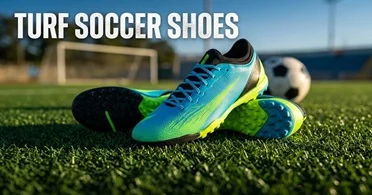
| Turf soccer shoes (TF) | Short artificial turf | Many small rubber nubs |
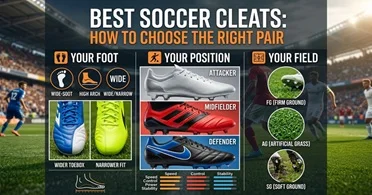
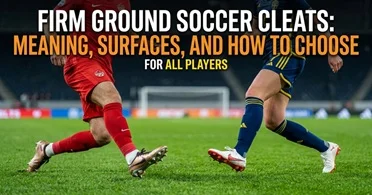
| Firm-ground cleats (FG) | Natural grass | Molded studs |
| Artificial-ground cleats (AG) | Artificial grass | Multiple short studs |
| Running shoes | Running surfaces | Running-specific tread |
Indoor soccer shoes and futsal shoes overlap in design. Both commonly use flat rubber outsoles, but futsal footwear may be optimized for the particular court, ball, and movement demands of futsal.
Can You Use Turf Shoes for Indoor Soccer?
Sometimes, but they are not the same as indoor shoes. Turf shoes have small rubber nubs intended for artificial turf. On a hard indoor court, those nubs may feel less stable or provide a different grip pattern than a flat indoor outsole.
If your league requires non-marking shoes, choose a model labeled for indoor use. Always check the facility’s footwear rules before playing.
Can You Wear Indoor Soccer Shoes on Turf?
You can use some indoor shoes on artificial turf, but they are not designed for every turf surface. Flat rubber outsoles may provide less traction than turf shoes, especially on longer or more abrasive artificial turf.
For regular outdoor turf play, turf-specific soccer shoes are generally the more appropriate footwear choice.
Can You Wear Running Shoes for Indoor Soccer?
Running shoes can be used for casual activity, but they are not a substitute for dedicated indoor soccer shoes. Running shoes are designed for forward motion and running comfort, while indoor soccer requires frequent lateral movements, quick stops, and changes of direction.
If you are playing a competitive match, a soccer-specific indoor shoe with a secure fit and suitable court grip is preferable.
What Is Special About Indoor Soccer Shoes?
Indoor soccer shoes combine a flat outsole, a low-profile feel, and a secure upper to support close control and movement on hard courts.
1. Non-Marking Rubber Outsole
The outsole provides traction while helping prevent black marks on gym floors. Many indoor facilities require this type of rubber outsole.
2. Low-Profile Construction
A low-profile sole keeps the foot closer to the court. This can make it easier to feel the ground during quick changes of direction and ball touches.
3. Flexible Forefoot
A flexible forefoot allows the foot to bend during dribbling, passing, and turning. The ideal amount of flexibility depends on the player’s comfort and playing style.
4. Secure Upper
The upper should hold the foot in place without creating excessive pressure. Synthetic leather, mesh, and knit materials are common choices.
5. Cushioning
Indoor courts are hard, so cushioning can improve comfort during extended play. The shoe should balance cushioning with the stable, close-to-the-ground feel needed for soccer.
Best Indoor Soccer Shoes: What to Look For
The best indoor soccer shoes depend on the player, surface, budget, and fit. Instead of choosing only by brand or appearance, compare the outsole, upper, cushioning, and size.
Nike Indoor Soccer Shoes
Nike offers indoor soccer footwear under its soccer and futsal ranges, including models in the Nike Tiempo and Mercurial families when an indoor version is available.
Nike indoor shoes may suit players who prefer a familiar brand, a close-fitting upper, or a lightweight design. Check the exact model’s outsole designation before buying because not every Nike soccer shoe is intended for indoor courts.
Adidas Indoor Soccer Shoes
Adidas produces indoor footwear in lines such as the Samba and Predator families. Adidas Samba shoes are widely associated with indoor soccer and futsal, although the original Samba is also a lifestyle sneaker.
For soccer-specific use, look for a model labeled indoor, futsal, or IN. A lifestyle shoe may work for casual play, but it should not automatically be treated as a dedicated performance futsal shoe.
Puma Indoor Soccer Shoes
Puma indoor soccer models include footwear designed for close control, movement, and court traction. When comparing Puma shoes, check the outsole and intended surface rather than relying on the brand name alone.
Samba Indoor Soccer Shoes
The Adidas Samba is a popular option for indoor soccer and futsal because of its flat rubber outsole and low-profile construction. Whether it is a good choice for you depends on fit, cushioning, court rules, and playing style.
Are Sambas good indoor soccer shoes? They can be suitable for casual or recreational indoor play, but a soccer-specific indoor model may be a better fit for players who need more specialized cushioning or a different upper.
Indoor Soccer Shoes for Men, Women, and Kids
Indoor soccer shoes are available in adult, youth, and children’s sizing. The main selection factors are fit, foot shape, comfort, and the appropriate outsole.
Men’s Indoor Soccer Shoes
Men’s indoor soccer shoes are available in a range of sizes and widths. A good pair should hold the heel securely and allow natural toe movement without excessive space.
Women’s Indoor Soccer Shoes
Women’s indoor soccer shoes may be available in women’s-specific sizing or unisex sizing. The best choice depends on the actual fit of the model, not only the label. Players should compare the manufacturer’s size chart and choose a comfortable, secure fit.
Indoor Soccer Shoes for Kids
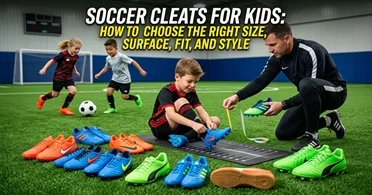
Kids’ indoor soccer shoes should fit securely without being overly tight. Children need enough room for natural toe movement, but excessive space can make it harder to control the ball and may increase slipping inside the shoe.
For younger players, choose a shoe with a flexible forefoot, suitable cushioning, and an outsole approved for the indoor facility.
Indoor Soccer Shoes for Boys and Girls
Boys’ and girls’ indoor soccer shoes generally serve the same purpose. The key differences are sizing, available widths, colors, and model-specific fit.
Parents should check the child’s current foot measurements and the manufacturer’s size chart rather than buying a much larger size for growth.
Youth and Toddler Indoor Soccer Shoes
Youth indoor soccer shoes are available in smaller sizes for children. Toddler footwear is less standardized, so check the actual product’s sizing and intended activity.
For toddlers who are beginning to play, comfort, secure fit, and appropriate court footwear matter more than advanced performance features.
How Should Indoor Soccer Shoes Fit?
Indoor soccer shoes should fit snugly enough to keep the foot secure, with enough room for the toes to move naturally. Your heel should not lift excessively, and your toes should not be forced against the front of the shoe.
Use this fit checklist:
- The heel stays in place when walking and changing direction.
- The toes can move without being squeezed.
- The widest part of the foot feels supported without painful pressure.
- The upper does not create hot spots or rubbing.
- The shoe feels secure during lateral movement.
Try shoes with the socks you normally wear for soccer. If buying online, check the return policy and the manufacturer’s sizing information.
Which Indoor Soccer Shoes Are Best for Wide Feet?
For wide feet, look for a model with a wider forefoot, a flexible upper, or an available wide size. A shoe should not force the toes together or create painful pressure along the sides of the foot.
The right choice depends on the specific model’s shape. A shoe marketed as a wide fit may still feel different from another wide-fit shoe.
How to Choose Indoor Soccer Shoes for Fast Play
For fast play, look for a secure heel, stable rubber traction, a flexible forefoot, and a lightweight construction that feels comfortable during quick changes of direction.
A low-profile outsole can help with ground feel, while sufficient cushioning supports comfort on hard courts. There is no single shoe feature that guarantees faster movement; fit, technique, and court conditions also matter.
Cushioning and Comfort
Extra cushioning can be useful for players who spend a long time on hard indoor courts. However, excessive softness may change the feel of the shoe during quick movements.
When comparing cushioning, consider:
- Heel and forefoot padding.
- Midsole thickness.
- Whether the shoe feels stable during side-to-side movement.
- Comfort during a full practice session.
- Your personal preference for ground feel.
Players who prioritize close control may prefer a lower-profile feel, while others may value additional comfort.
Can You Wear Indoor Soccer Shoes Outside?
Yes, indoor soccer shoes can be worn outside for casual walking or on suitable flat surfaces. However, frequent outdoor use may wear down the rubber outsole more quickly, especially on rough concrete or asphalt.
Avoid using indoor shoes on natural grass or abrasive outdoor turf when the shoe is not designed for those surfaces. The outsole may not provide the required traction.
Indoor Soccer Shoes Price in Pakistan
Indoor soccer shoes in Pakistan vary in price depending on the brand, model, size, seller, and whether the product is imported. Prices change over time, so check the current listing before purchasing.
If you are searching for indoor soccer shoes in Pakistan, compare the product’s outsole, sizing, return policy, shipping charges, and authenticity. A lower price does not necessarily mean the shoe is suitable for indoor soccer.
Where to Buy Indoor Soccer Shoes
In the United States, indoor soccer shoes are commonly available through soccer specialty stores, sporting-goods retailers, and official brand websites.
For online purchases, confirm the following before ordering:
- The outsole is labeled indoor or futsal.
- The size chart matches the brand and model.
- The product is intended for your playing surface.
- The seller provides a clear return or exchange policy.
- The total price includes shipping and any additional fees.
For local searches such as “indoor soccer shoes near me” or “indoor soccer shoes nearby,” use a store locator or search for soccer specialty retailers in your area.
Common Mistakes When Buying Indoor Soccer Shoes
Buying Firm-Ground Cleats for Gym Floors
Firm-ground cleats have studs designed for natural grass. They are not a substitute for flat indoor soccer shoes.
Confusing Turf and Indoor Shoes
Turf shoes and indoor shoes have different outsole designs. Choose based on the actual surface you play on.
Choosing a Shoe That Is Too Large
An oversized shoe can allow the foot to slide inside the shoe during turns and stops. Secure fit is important for control and comfort.
Ignoring Facility Rules
Some indoor leagues require non-marking soles or specific footwear. Check the rules before purchasing.
Choosing by Brand Alone
Nike, Adidas, Puma, and other brands offer different models. Compare the actual shoe’s construction and intended surface.
Frequently Asked Questions
Dedicated indoor soccer shoes with flat, non-marking rubber outsoles are the standard choice for smooth indoor courts. Futsal shoes are also suitable when designed for the playing surface and accepted by the facility.
Wear indoor soccer shoes or futsal shoes with a flat rubber outsole. Avoid firm-ground cleats on gym floors, and do not assume running shoes or turf shoes provide the same performance.
Indoor soccer shoes are soccer footwear designed for flat indoor courts. They generally use a flat rubber outsole without traditional studs.
Adidas Sambas can work well for casual indoor soccer and futsal when the fit and outsole suit the court. For competitive play, compare them with dedicated indoor soccer models.
Turf shoes may work on some indoor surfaces, but they are designed for artificial turf. Check the facility’s rules and use indoor-specific footwear when required.
Some indoor shoes can be used on artificial turf, but flat rubber outsoles may not provide the traction of turf-specific shoes. Match the outsole to the surface.
You can walk or run casually in indoor soccer shoes, but they are designed for soccer movements rather than long-distance running. Running shoes are better suited to regular running.
Choose footwear based on the court surface, outsole, fit, cushioning, and playing style. Futsal shoes and indoor soccer shoes are often similar, but the exact model should be appropriate for the court.
Some models have wider forefoots or wide-size options. Look for a shape that does not squeeze the toes and check the manufacturer’s fit information.
Under a $120 budget, compare available indoor models from established soccer footwear brands. Check current prices, outsole type, fit, and return policies before purchasing. The best option depends on your specific needs and the products available at the time.
Conclusion
Indoor soccer shoes are designed for flat indoor courts, with non-marking rubber outsoles that support traction and movement without outdoor studs. When choosing a pair, focus on the playing surface, fit, comfort, and outsole rather than brand popularity alone.
For indoor soccer and futsal, a properly fitted indoor shoe can help you move comfortably and control the ball with confidence. Check your league’s footwear rules and choose the model that matches your court and playing style.