Choosing the right soccer ball size helps players practice comfortably and use the equipment required by their league. The most common sizes are 3, 4, and 5, but sizes 1 and 2 are also available for smaller training balls.
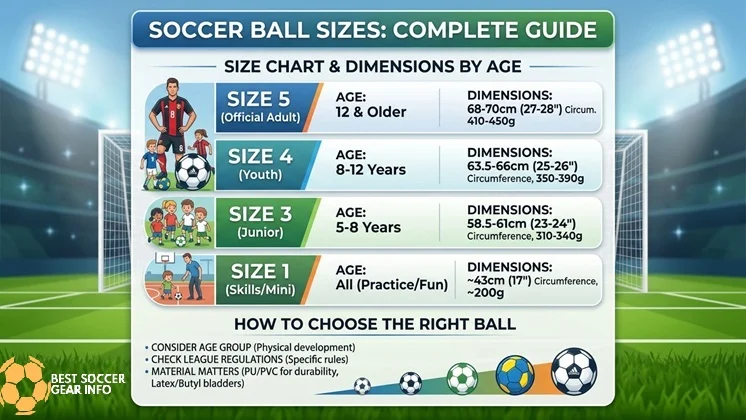
For most children ages 4–8, a size 3 ball is a useful starting point. Many youth leagues use size 4 for ages 8–12, while older youth and adult matches use size 5. These age ranges are general guidance; the actual ball size is determined by the competition’s rules.
Soccer ball sizes by age
The following chart combines common age-based buying guidance with the published AYSO ball-size requirements. AYSO uses size 3 for 6U and 8U, size 4 for 10U and 12U, and size 5 for 14U, 16U, and 19U. Other leagues may use different age cutoffs. AYSO ball-size requirements
| Player age or group | Soccer ball size | Typical use |
| Ages 2–3 | Size 1 or 2 | Early skills practice and play |
| Ages 4–5 | Size 3 | Young children and introductory soccer |
| Ages 6–8 | Size 3 | Common youth and small-sided soccer |
| Ages 9–10 | Size 4 | Many youth leagues |
| Ages 11–12 | Size 4 | Many youth leagues, including AYSO 10U and 12U |
| Ages 13–14 | Size 5 or size 4 | Depends on league rules |
| Ages 15–17 | Size 5 | Older youth and high school soccer |
| Adults and professionals | Size 5 | Standard full-size soccer |
Important: Age is not the only factor. A 12-year-old may need a size 4 ball in one league and a size 5 in another. Always follow the team’s equipment requirements.
What size soccer ball for a 3-year-old?
A size 1 or size 2 ball can be suitable for casual play and basic foot skills. A size 3 is also used in introductory youth soccer programs. The best choice depends on the program’s equipment requirements and the child’s ability to control the ball.
What size soccer ball for a 4-year-old or 5-year-old?
A size 3 is a common choice for children beginning organized soccer. It is smaller than a full-size ball and is used in many youth programs.
What size soccer ball for a 6-year-old, 7-year-old, or 8-year-old?
A size 3 is commonly used for this age range. AYSO’s 6U and 8U divisions use size 3 balls, with a circumference of 23–25 inches and a weight of 10–12 ounces.
What size soccer ball for a 9-year-old or 10-year-old?
A size 4 is a common youth soccer ball for this age range. In AYSO, the 10U division uses size 4. Check the local league’s equipment rules before buying.
What size soccer ball for an 11-year-old or 12-year-old?
A size 4 is commonly used for ages 11–12. AYSO’s 12U division uses size 4. Some competitions transition to size 5 around this age, so the league’s rules matter more than age alone.
What size soccer ball for a 13-year-old, 14-year-old, or older player?
Many players in this age range use size 5. AYSO uses size 5 for 14U and older divisions. A 13-year-old may still use a size 4 in a league that has not yet moved to the full-size ball.
What do soccer ball sizes mean?
Soccer ball sizes describe the approximate circumference and intended use of a ball. They do not describe the player’s height, weight, or skill level.
A size 5 ball is the standard full-size soccer ball used in adult matches. A size 4 is smaller and is commonly used in youth soccer, while size 3 is smaller still.
The size number is not a rating of quality. A size 3 ball can be well made, and a size 5 ball can be poorly made. Quality depends on Soccer Ball Materials, construction, durability, and how the ball performs.
Soccer ball size chart: Circumference, weight, and diameter
The following chart shows typical size ranges. The size 3, 4, and 5 values are based on AYSO’s published ball specifications. The diameter is calculated from the circumference using the formula:
Diameter = Circumference ÷ π
| Ball size | Circumference | Approx. diameter | Weight | Common use |
| Size 1 | About 43–51 cm (17–20 in) | About 14–16 cm (5.5–6.4 in) | Varies | Mini ball |
| Size 2 | About 51–56 cm (20–22 in) | About 16–18 cm (6.4–7 in) | Varies | Skills and small training |
| Size 3 | 58.4–63.5 cm (23–25 in) | 18.6–20.2 cm (7.3–8.0 in) | 283–340 g (10–12 oz) | Young youth |
| Size 4 | 63.5–67.3 cm (25–26.5 in) | 20.2–21.4 cm (8.0–8.4 in) | 340–397 g (12–14 oz) | Youth |
| Size 5 | 67.3–71.1 cm (26.5–28 in) | 21.4–22.6 cm (8.4–8.9 in) | 397–454 g (14–16 oz) | Older youth and adults |
The size 1 and size 2 figures are approximate retail-size ranges rather than universal match specifications. Size 3, 4, and 5 specifications vary by organization, and AYSO’s size 5 range is slightly wider than the strict adult match circumference range.
Official size 5 soccer ball dimensions
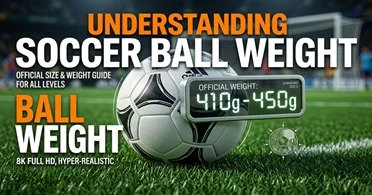
Under the IFAB Laws of the Game, the ball used in a standard 11-a-side match must have a circumference of 68–70 cm (27–28 inches), a weight of 410–450 grams (14–16 ounces) at the start of the match, and a pressure of 0.6–1.1 atmospheres at sea level, equivalent to approximately 8.5–15.6 PSI. IFAB Law 2
A size 5 ball is not a perfect sphere of one fixed diameter. Its approximate diameter is 21.6–22.3 cm (8.5–8.8 inches), calculated from the official circumference range.
How big is a size 4 soccer ball?
A size 4 soccer ball has a circumference of about 25–26.5 inches in AYSO’s youth specifications. Its calculated diameter is approximately 8–8.4 inches.
How big is a size 3 soccer ball?
A size 3 soccer ball has a circumference of about 23–25 inches in AYSO’s youth specifications. Its calculated diameter is approximately 7.3–8 inches.
How much does a size 5 soccer ball weigh?
An official adult-match ball weighs 410–450 grams, or approximately 14–16 ounces, at the start of a match. The actual weight of a retail size 5 ball may differ, so check its product specifications if Soccer Ball Weight is important.
What is the official or regulation soccer ball size?
A standard adult soccer match uses a size 5 ball. IFAB Law 2 specifies the required circumference, weight, and pressure for balls used in matches governed by its Laws of the Game.
The official circumference is 68–70 cm (27–28 inches). The official weight is 410–450 grams (14–16 ounces). The official pressure is 0.6–1.1 atmospheres at sea level, or 8.5–15.6 PSI.
Is size 5 the biggest soccer ball?
Size 5 is the largest of the common numbered soccer ball sizes used for standard outdoor soccer. Sizes 6, 7, and 8 are not standard soccer ball sizes under the usual size 1–5 system. A manufacturer may sell a larger novelty or specialty ball, but it is not a standard full-size match ball.
Is there a size 6 or size 7 soccer ball?
There are no standard adult soccer match sizes 6 or 7. Standard soccer ball sizes are 1 through 5. If you see a product advertised as size 6 or size 7, check whether it is a novelty product, a specialty training ball, or a different type of sports ball.
What is the smallest soccer ball size?
Size 1 is the smallest commonly sold numbered soccer ball size. It is often called a mini soccer ball and is used for skills practice, casual play, or collectibles.
Size 4 vs. size 5 soccer ball
The main difference between a size 4 and a size 5 soccer ball is its circumference, weight, and intended age group.
| Feature | Size 4 | Size 5 |
| Circumference | About 25–26.5 in | About 27–28 in |
| Typical weight | 12–14 oz | 14–16 oz |
| Typical age | Youth | Older youth and adults |
| Adult match use | Not standard | Standard |
| Control | Smaller ball for many younger players | Full-size ball for older players |
A size 4 may be easier for a younger player to control. A size 5 is the correct size for standard adult matches and is useful for older players who are preparing for full-size competition.
Should I get a size 4 or size 5 soccer ball?
Choose the size required by the player’s league. For an older youth player moving toward full-size soccer, a size 5 can be useful for practice if permitted by the coach. For a younger player in a size 4 league, a size 4 is the appropriate match and practice ball.
Soccer ball sizes by league and playing context
U6, U7, and U8 soccer ball size
Size 3 is commonly used for U6, U7, and U8 soccer. AYSO’s 6U and 8U divisions use size 3. Other organizations may have different rules for U7 or U8.
U9 and U10 soccer ball size
Size 4 is a common choice for U9 and U10 youth soccer. AYSO’s 10U division uses size 4.
U11 and U12 soccer ball size
Size 4 is common for U11 and U12. AYSO’s 12U division uses size 4. The correct ball for a specific team is the one required by its league.
U13, U14, and U15 soccer ball size
Size 5 is commonly used for U14 and older soccer. U13 can be a transition age, so check the league’s rules.
High school soccer ball size
High school soccer uses a size 5 ball in standard full-size matches. The ball should meet the competition’s equipment requirements.
Professional soccer ball size
Professional outdoor soccer uses a size 5 ball. Under IFAB Law 2, official competition balls must meet the law’s requirements and carry the applicable FIFA Quality Programme mark.
Women’s soccer ball size
Women’s outdoor soccer uses a size 5 ball under the standard Laws of the Game. The ball size is not smaller because the players are women.
Middle school soccer ball size
Middle school soccer may use size 4 or size 5 depending on the age group and league rules. A size 4 is common in many youth programs, while size 5 is used for older players.
Indoor and futsal soccer ball sizes
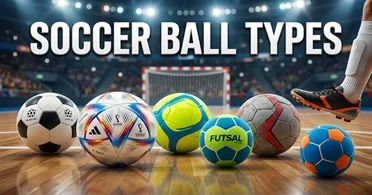
Futsal is played with a different ball from standard outdoor soccer. A typical futsal ball is size 4, but it is designed with different performance characteristics, including reduced bounce.
A size 4 outdoor soccer ball is not automatically a futsal ball. If you play futsal, buy a ball labeled for futsal and follow the competition’s requirements.
Soccer ball pressure and PSI
Inflation pressure is separate from ball size. The correct pressure depends on the ball’s specifications and the playing conditions.
For standard adult matches, IFAB Law 2 allows a pressure of 0.6–1.1 atmospheres at sea level, which is approximately 8.5–15.6 PSI. The pressure may be lower or higher for other ball types or training uses.
| Question | Answer |
| PSI for a size 5 soccer ball | Use the manufacturer’s recommended pressure; adult match balls must meet the applicable official pressure range. |
| PSI for a size 4 soccer ball | Follow the ball’s label or manufacturer instructions. |
| PSI for a size 3 soccer ball | Follow the ball’s label or manufacturer instructions. |
| Is pressure the same as size? | No. Size is about the ball’s dimensions; pressure is about inflation. |
Do not use a size 5 pressure recommendation for every size 3 or size 4 ball. Check the ball’s printed specifications.
How to choose the right soccer ball size
- Check the league’s ball-size rule. This is the most important step for organized soccer.
- Consider the player’s age and skill level. Younger players often benefit from a smaller ball.
- Choose the appropriate playing surface. Outdoor soccer, indoor soccer, and futsal may require different ball types.
- Check the manufacturer’s specifications. Confirm the ball’s size, weight, pressure range, and intended use.
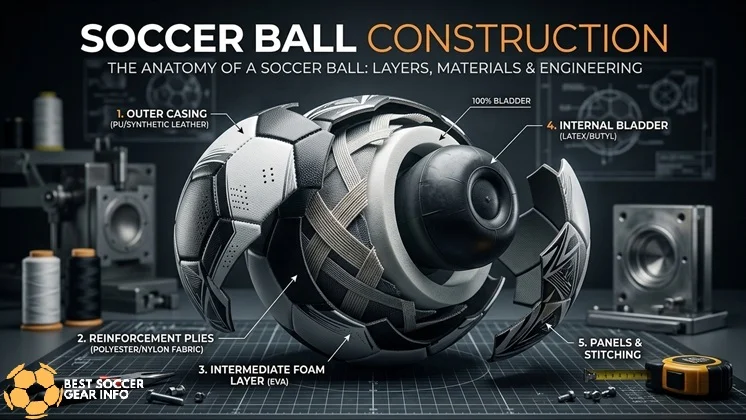
- Choose a durable ball for regular practice. Look for suitable Soccer Ball Construction, a reliable valve, and materials appropriate for the playing surface.
Common soccer ball size mistakes
Assuming every 12-year-old uses size 5
Age alone does not determine the ball size. Some 12-year-olds play with size 4, while others may use size 5 under their league’s rules.
Confusing a size 4 ball with a futsal ball
Futsal balls are commonly size 4, but they are designed differently from outdoor soccer balls. Size alone does not identify the ball type.
Buying a larger ball because it seems more professional
A larger ball is not automatically better for every player. Use the size required by the competition or the size suitable for the player’s practice needs.
Treating PSI as a fixed number for every soccer ball
The correct inflation pressure depends on the ball’s specifications. Always check the manufacturer’s recommended range.
Frequently asked questions
Professional outdoor soccer players use a size 5 ball. The ball must meet the applicable match requirements.
A size 3 ball is common for a 7-year-old. The exact size depends on the league.
A size 3 is common, although some leagues use size 4 for older youth. Check the team’s rules.
A size 4 ball is common for a 10-year-old. AYSO’s 10U division uses size 4.
A size 4 ball is common for a 12-year-old. AYSO’s 12U division uses size 4.
A size 5 ball is common for a 14-year-old, but the league’s rules determine the required size.
A standard adult-match ball has a calculated diameter of approximately 21.6–22.3 cm, or 8.5–8.8 inches.
A size 4 ball has a typical circumference of about 25–26.5 inches. Its diameter is approximately 8–8.4 inches.
There are five common numbered soccer ball sizes: 1, 2, 3, 4, and 5.
A full-size soccer ball is a size 5 ball used for standard adult outdoor soccer. Its official match circumference is 68–70 cm.
Yes. Size 5 is the standard ball size for adult outdoor soccer and professional matches.
Conclusion
Soccer ball sizes range from small size 1 mini balls to full-size size 5 match balls. For many young children, size 3 is a useful starting point; size 4 is common in youth leagues, and size 5 is the standard for older youth and adult soccer.
The best soccer ball is the one that matches the player’s league and playing needs. Check the required size, circumference, weight, and inflation pressure before purchasing.