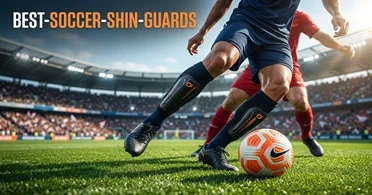
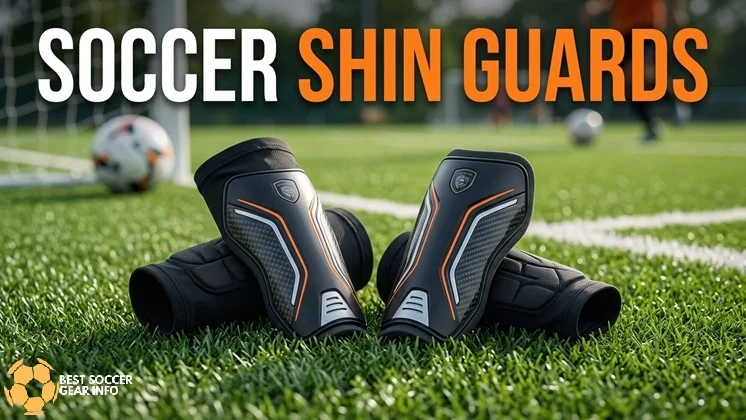
The best soccer shin guards are the ones that provide adequate shin coverage, stay securely in place, fit your height and leg shape, and are comfortable enough to wear throughout a match. For most players, the main choice is between lightweight slip-in guards, flexible guards with compression sleeves, and traditional guards with more coverage or ankle protection.
For 2026, options such as the Nike Mercurial Lite, G-Form’s sleeved soccer guards, and current adidas models illustrate the main choices available: low-profile hard-shell protection, flexible impact-absorbing protection, and traditional or high-coverage designs.
Quick Picks: Best Soccer Shin Guards
| Shin guard | Best suited for | Protection style | Main advantage |
| Nike Mercurial Lite | Adults, teens, competitive players | Hardshell + foam | Thin, lightweight design |
| G-Form Pro-S Vento | Players who dislike slipping guards | Flexible SmartFlex + integrated sleeve | Secure, close-fitting design |
| adidas Tiro League | Players wanting traditional slip-in protection | Lightweight shield + sleeve | Balance of coverage and mobility |
| adidas F50 Competition | Players wanting a lightweight performance guard | Lightweight shield | Low-bulk design |
| Traditional ankle-protection guards | Younger players and players wanting more coverage | Shield + ankle padding | Greater lower-leg coverage |
Product availability, colors, sizes, and prices can change, so check the manufacturer’s current specifications before purchasing. adidas currently lists several soccer shin-guard styles ranging from lightweight slip-in models to higher-coverage designs with ankle guards.
What Are Soccer Shin Guards?
Soccer shin guards, also called shin pads, are protective equipment worn over the front of the lower leg. They are designed to help protect the shin from contact with another player’s foot, ball, or leg.
They normally consist of:
- A protective shield
- Foam or another cushioning layer
- A sleeve, strap, or other retention system
- In some models, ankle protection
- In some integrated designs, a compression sleeve surrounding the guard
U.S. Soccer’s equipment guidance says shin guards should end just below the knee, fit snugly around the ankle bone, and be completely covered by the player’s socks.
Are shin guards required in soccer?
For organized soccer, shin guards are generally part of the required player equipment. The exact competition rules can vary by league and governing body, so players should check their competition’s equipment requirements.
The Best Soccer Shin Guards for Different Players
There isn’t one universally best shin guard. The right choice depends on how much coverage you want, how important low weight is to you, and how well the guard stays in place.
1. Nike Mercurial Lite — Best Low-Profile Option
The Nike Mercurial Lite is designed around a thin hardshell-and-foam construction. Nike describes it as an ultra-thin guard with a durable shell and foam intended to diffuse impact. It also has a left/right-specific fit and is NOCSAE certified.
Why consider it:
- Low-profile construction
- Lightweight feel
- Hardshell protection
- Foam layer
- Left/right-specific design
- NOCSAE certification
- Available in XS through XL
The current Nike model is available in five adult/youth size labels, from XS to XL.
Best for: players who want a traditional protective shield without a bulky feel.
2. G-Form Pro-S Vento — Best for a Secure Sleeve Fit
The G-Form Pro-S Vento takes a different approach. Instead of a conventional hard shell, it uses G-Form’s SmartFlex material in an integrated sleeve construction. G-Form describes SmartFlex as flexible during play and designed to harden on impact. The Vento also has moisture-wicking fabric and is machine washable.
Why consider it:
- Integrated guard and sleeve
- Flexible construction
- Low-profile design
- Moisture-wicking fabric
- Machine washable
- NOCSAE certified
- Designed to stay close to the leg
This type of construction can be particularly appealing if conventional slip-in guards constantly move around during play.
Anecdotal Reddit discussions also frequently mention G-Form guards when players are looking for comfortable guards that stay in place, although those comments are individual experiences rather than controlled product testing.
Best for: players who prioritize a close, sleeve-based fit.
3. Adidas Tiro League — Best Traditional All-Around Style
The adidas Tiro range represents the more traditional soccer-shin-guard approach. adidas currently offers Tiro guards alongside lightweight and high-coverage options. Its current soccer-shin-guard range includes sleeve-secured designs and models with ankle protection.
Best for: players who want conventional soccer protection with a familiar fit.
4. adidas F50 Competition — Lightweight Performance Option
The adidas F50 Competition is part of adidas’ current soccer shin-guard lineup. The company lists it as a performance model and also offers an F50 Match Junior version for younger players.
Best for: players who want a performance-oriented guard without choosing a bulky design.
Types of Soccer Shin Guards
The best type depends on the player’s priorities.
Slip-In Shin Guards
Slip-in shin guards are placed directly inside the soccer sock.
Advantages:
- Lightweight
- Minimal bulk
- Easy to put on
- Good freedom of movement
- Popular among older and competitive players
Potential drawback: they can move downward if the sock or retention system does not hold them securely.
A sleeve or appropriate retention system can help keep them positioned correctly.
Shin Guards With Sleeves
Sleeved shin guards use a compression sleeve around the protective pad.
This design can be useful for players who dislike constantly adjusting traditional slip-in guards.
G-Form’s Pro-S Vento is an example of an integrated sleeve design, while adidas also offers guards that use sleeves to help secure the shield.
Shin Guards With Ankle Protection
These guards extend protection around the ankle area.
They can be useful for:
- Younger players
- Players who want more coverage
- Players who prefer additional ankle padding
- Recreational players who don’t mind extra bulk
The trade-off is that ankle protection generally creates a larger, less minimal setup than a small slip-in guard.
Hard-Shell Shin Guards
Hard-shell guards use a relatively rigid outer shield.
They are popular with players who want a conventional protective barrier between the shin and contact.
Nike’s Mercurial Lite, for example, combines a durable shell with foam.
Flexible Shin Guards
Flexible guards use materials designed to move more naturally with the leg.
G-Form’s Pro-S Vento is an example of this category, using SmartFlex material that the company describes as flexible during movement and hardening on impact.
How to Choose the Best Soccer Shin Guards
Focus on five things: fit, coverage, retention, construction, and comfort.
1. Choose the Correct Size
Height is a useful starting point because shin guards need to cover the appropriate portion of the lower leg without extending too high toward the knee.
Nike’s current sizing chart uses height as its primary sizing measurement. For example, its kids’ chart lists:
| Nike size | Height | Listed age range |
| S | 48–51 in | 4–6 |
| M | 51–55 in | 7–9 |
| L | 55–59 in | 10–12 |
For adults, Nike lists XS through XL, with the chart ranging from 55–59 inches through 71–79 inches.
Adidas uses a similar height-based approach. Its current chart lists junior sizes from 100–120 cm through 140–160 cm, while adult sizes extend from 120–140 cm through 195 cm and above.
Important: these age ranges are manufacturer-specific guides, not universal soccer sizing standards. Always use the sizing chart for the exact model.
Best Soccer Shin Guards by Age
Age can help narrow the choices, but height and actual fit should take priority over age alone.
Best Soccer Shin Guards for 5 Year Old
For a 5-year-old, look for:
- A properly sized youth guard
- Comfortable coverage
- A secure retention system
- Soft edges
- A design that doesn’t interfere with running
Nike’s current kids’ chart places ages 4–6 in its S category, corresponding to a height range of 48–51 inches.
That does not mean every 5-year-old needs Nike S. Measure the child and check the specific manufacturer’s chart.
Best Soccer Shin Guards for 6 Year Old
A 6-year-old may still fall within a small youth size, but height should determine the final selection.
A guard that is too large can be uncomfortable and may interfere with movement, while one that is too small may leave inadequate coverage.
Best Soccer Shin Guards for 8 Year Old
For an 8-year-old, Nike’s current chart lists 7–9 years within its M kids’ category, corresponding to 51–55 inches.
However, another manufacturer may use different sizing.
Best Soccer Shin Guards for 10 Year Old
Nike currently lists ages 10–12 within its kids’ L category, corresponding to 55–59 inches.
A 10-year-old who is significantly taller or shorter should not automatically select a size based only on age.
Best Soccer Shin Guards for 12 Year Old
At age 12, players may be approaching the transition from youth to adult sizing.
The correct choice depends on height and the manufacturer’s sizing system. Nike’s current kids’ chart includes age 12 within its L category, while its adult chart begins at 55 inches with XS.
This illustrates why age alone isn’t enough: the same height can overlap between a youth and adult size category.
Best Shin Guards for Youth Soccer
For youth soccer, prioritize:
- Correct length
- Secure fit
- Adequate shin coverage
- Comfortable materials
- Easy adjustment
- League compatibility
Younger players may also prefer ankle protection because it provides more coverage than a minimalist slip-in guard.
Adidas currently offers youth-specific models including Tiro Match Kids and F50 Match Junior shin guards.
Best Soccer Shin Guards for Teens
Teen players have a wider selection because many can use either youth or adult-sized models depending on their height.
A teenager who wants minimal bulk may prefer a low-profile slip-in design such as the Nike Mercurial Lite. Someone who prioritizes a secure sleeve fit may prefer a G-Form-style integrated guard.
Best Soccer Shin Guards for Adults
Adult players should choose primarily according to:
- Height
- Shin length
- Leg circumference and shape
- Desired coverage
- Playing level
- Personal comfort
- Retention method
Nike’s adult chart currently covers XS through XL, while adidas provides adult sizing through XXL in its sizing guide.
There is no separate construction that makes a shin guard inherently “men’s” or “women’s.” Fit and sizing matter more than the gender label used in a product listing.
Best Men’s Soccer Shin Guards
For men, the same basic selection principles apply: correct size, secure retention, suitable coverage, and comfort.
A larger player should not automatically choose the largest guard. The guard should fit the player’s leg and end below the knee as recommended by U.S. Soccer.
Best Women’s Soccer Shin Guards
Women can use the same major types of soccer shin guards as men.
The important considerations are:
- Height
- Lower-leg shape
- Guard length
- Calf fit
- Sleeve tightness
- Whether the guard stays in position
G-Form’s current soccer collection, for example, lists products across men’s, women’s and youth categories.
Best Soccer Shin Guards With Ankle Protection
Choose ankle protection when coverage is more important to you than having the smallest possible guard.
Ankle guards add material around the lower leg and ankle, making them bulkier than minimalist slip-in guards.
They can be particularly useful for younger players or anyone who prefers additional coverage.
However, not every player needs ankle protection. Adidas currently distinguishes between lightweight guards and designs that provide higher coverage with ankle guards.
Best Small Soccer Shin Guards
Small shin guards are popular among players who want maximum mobility and minimal bulk.
The key is not to make the guard unnecessarily small. It still needs to provide appropriate shin coverage and comply with the player’s competition rules.
Anecdotal discussions in soccer communities frequently mention small Nike guards and other minimalist designs, but preferences vary considerably between players.
Which Is Better: Hard Shell or Flexible Shin Guards?
Neither construction is automatically right for every player.
| Feature | Hard shell | Flexible |
| Structure | Rigid/semi-rigid outer shield | Flexible material |
| Feel | More traditional | More body-conforming |
| Bulk | Usually moderate | Often low |
| Flexibility | Lower | Higher |
| Coverage options | Wide range | Wide range |
| Best for | Players wanting conventional shield protection | Players prioritizing flexibility and close fit |
Adidas describes modern shin guards as falling into flexible, semi-flexible, and hard categories, while its current range includes both minimalist and higher-coverage designs.
G-Form uses a different approach with SmartFlex material that the company says remains flexible during play and hardens on impact.
How to Stop Soccer Shin Guards From Slipping Down
If your shin guards don’t stay in place, first check the size.
Common causes include:
- Guard is too small or too large
- Sock is too loose
- Retention sleeve is loose
- Guard shape doesn’t match the leg
- The player is using an incompatible sleeve
- Sweat reduces friction
A properly fitted sleeve can make a major difference. Integrated sleeve guards are another option.
Community discussions frequently mention sleeves, grip socks, or other retention methods when players have problems with movement, but these are individual experiences rather than universal solutions.
Most importantly, don’t make the guard so tight that it becomes uncomfortable.
How Should Soccer Shin Guards Fit?
A properly fitted soccer shin guard should:
- Cover the intended shin area
- Sit below the knee
- Stay in place while running
- Not dig painfully into the leg
- Allow normal movement
- Remain covered by the sock
U.S. Soccer specifically advises that shin guards should end just below the knee and fit snugly around the ankle bone.
If the guard constantly slides downward, don’t simply keep adjusting it during the game. Recheck the size and retention system.
How to Clean Soccer Shin Guards
Cleaning your shin guards regularly helps remove sweat, dirt and odor.
For hard-shell guards
- Remove the guards from your socks or sleeves.
- Wipe away dirt.
- Clean according to the manufacturer’s instructions.
- Allow them to dry completely before storage.
- Do not expose them to unnecessary high heat.
For washable sleeve-style guards
Follow the specific manufacturer’s washing instructions.
For example, G-Form states that the Pro-S Vento is machine washable.
Nike’s Mercurial Lite instructions currently specify hand wash, so don’t assume every shin guard can go into a washing machine.
Best Way to Clean Soccer Shin Guards
The safest method is to follow the care label for the exact product.
For a basic hard-shell guard:
- Remove the sleeve if it is detachable.
- Wipe the shell with mild soap and water.
- Clean the inside padding.
- Rinse away residue.
- Air-dry completely.
- Store in a dry, ventilated place.
Avoid using harsh chemicals unless the manufacturer specifically recommends them.
Soccer Shin Guards vs. Muay Thai Shin Guards
Soccer shin guards and Muay Thai shin guards are not interchangeable pieces of equipment.
Soccer shin guards are designed around the needs of soccer players, including a relatively slim profile that works underneath soccer socks.
Muay Thai shin guards are designed for a different sport and different training requirements. They generally provide substantially more padding and coverage.
Therefore, a search for “best shin guards Muay Thai” belongs to a separate equipment category and should not be used to choose soccer shin guards.
What About Carbon Fiber Soccer Shin Guards?
Carbon fiber is sometimes marketed as a premium material for lightweight protective equipment.
The important thing is not the material name by itself. Evaluate:
- Overall coverage
- Weight
- Fit
- Retention
- Certification where required
- Durability
- Replacement cost
A carbon-fiber guard isn’t automatically better for every soccer player simply because carbon fiber is used in its construction.
Do Soccer Shin Guards Need to Be NOCSAE Certified?
Certification requirements depend on the competition or governing organization.
NOCSAE certification is worth checking when your league or organization requires it. Some current products, including Nike Mercurial Lite and G-Form Pro-S Vento, identify NOCSAE certification in their product specifications.
Before buying for organized competition, check your league’s equipment rules rather than relying solely on a retailer’s description.
Are More Expensive Shin Guards Better?
Not necessarily.
Price can reflect:
- Materials
- Construction
- Brand
- Sleeve integration
- Design
- Certification
- Manufacturing costs
But a more expensive guard doesn’t automatically mean it is the right guard for your leg.
A properly fitting $20–$30 guard can be more suitable for a particular player than a substantially more expensive model that moves around or feels uncomfortable.
Best Soccer Shin Guards: Hard Shell vs. Sleeve vs. Ankle Guard
| Type | Mobility | Coverage | Retention | Best suited for |
| Slip-in | High | Moderate | Depends on sock/sleeve | Players wanting minimal bulk |
| Hardshell + sleeve | High | Moderate | Good | Players wanting shield + secure fit |
| Integrated flexible sleeve | High | Moderate | Very good when correctly fitted | Players who dislike slipping |
| Ankle guard | Moderate | High | Usually secure | Players wanting more coverage |
| Traditional strapped guard | Moderate | Moderate–high | Adjustable | Players wanting conventional fit |
The best choice depends on which characteristics matter most to the player.
Common Soccer Shin Guard Mistakes
Buying Based Only on Age
Age is useful for narrowing the options, but height and fit should determine the final size.
Choosing the Smallest Possible Guard
Small doesn’t automatically mean better. A guard still needs appropriate coverage.
Ignoring Retention
A good shin guard that continually slides down isn’t functioning as intended.
Assuming All Brands Size the Same
Nike and adidas use different sizing systems. Always consult the manufacturer’s chart.
Washing Every Guard the Same Way
Care instructions differ. Nike’s Mercurial Lite, for example, specifies hand washing, while G-Form’s Pro-S Vento is machine washable.
Choosing Muay Thai Guards for Soccer
Muay Thai and soccer require different equipment. Use soccer-specific shin guards for soccer.
Frequently Asked Questions
The best soccer shin guards depend on the player’s preferred balance between coverage, weight, flexibility, and retention. Nike Mercurial Lite is a low-profile hardshell option, while G-Form Pro-S Vento is an integrated flexible sleeve design. Adidas also offers lightweight and higher-coverage choices.
Choose a youth-sized guard based primarily on the child’s height and the manufacturer’s sizing chart. Younger players may prefer a more secure design or ankle protection rather than an extremely small minimalist guard.
Look for a properly sized youth model with enough shin coverage and a retention system that keeps the guard in position. Current adidas options include youth versions of its Tiro and F50 ranges.
Adults can choose between minimalist slip-in guards, hard-shell models, flexible sleeve designs, and higher-coverage guards. Height, leg shape, coverage preference and retention are more important than simply choosing an “adult” label.
Use the child’s height and the manufacturer’s size chart rather than age alone. Nike currently lists ages 10–12 within its kids’ L category, corresponding to 55–59 inches, but other manufacturers can differ.
Measure height first. A 12-year-old may fall near the boundary between youth and adult sizing, depending on the brand. Nike’s current chart includes age 12 in its kids’ L range while its adult XS range begins at 55 inches.
For an 8-year-old, compare the child’s height with the youth size chart. Nike’s current chart places ages 7–9 in its M kids’ category, but the height range should be the deciding measurement.
A properly sized youth guard with secure retention is generally more important than a premium adult-style model. Nike currently lists ages 4–6 in its S kids’ category, but measure the child before ordering.
Teen players can consider both youth and adult models depending on height. Lightweight slip-in guards are popular for players who want minimal bulk, while integrated sleeve guards can be useful for players who have trouble keeping traditional guards in place.
Look for the correct size and a secure retention system. Integrated sleeve designs such as the G-Form Pro-S Vento are specifically constructed with the guard and sleeve together.
G-Form offers flexible soccer-specific shin guards using its SmartFlex technology. The Pro-S Vento combines an impact-absorbing pad with an integrated sleeve, moisture-wicking fabric and NOCSAE certification.
The Nike Mercurial Lite uses a thin shell and foam construction, with left/right-specific fitting and NOCSAE certification. It is a suitable option for players looking for a low-profile hardshell design.
There is no single type that suits every player. Slip-in guards emphasize low bulk, sleeve guards emphasize retention and close fit, flexible guards emphasize mobility, and ankle guards provide additional coverage. Choose according to your priorities and league requirements.
They don’t necessarily need to. Ankle protection is an option rather than a requirement for every player. Choose it if you want additional coverage and don’t mind the extra material.
Start with your height and the manufacturer’s size chart. Then decide how much coverage you want, whether you prefer a hard or flexible guard, how important low weight is, and how you want the guard secured.
Yes, provided they are appropriately sized and provide suitable coverage for the player and competition. Don’t choose a guard solely because it is the smallest model available.
Shin guards are standard required equipment in organized soccer. The exact requirements can depend on the competition. U.S. Soccer’s equipment guidance includes properly fitted shin guards among player equipment.
Final Verdict: Which Soccer Shin Guards Should You Choose?
The best choice comes down to the type of player you are.
Choose a Nike Mercurial Lite if you want a thin, conventional hardshell guard with a low-profile feel.
Choose a G-Form Pro-S Vento if staying in place and having an integrated sleeve are priorities.
Consider adidas if you want a broad selection ranging from lightweight slip-in guards to higher-coverage designs with ankle protection.
For kids and youth players, don’t select a guard solely from an age label. Measure height, check the exact manufacturer’s sizing chart, and make sure the guard sits correctly below the knee and remains secure during play.
The most expensive or smallest shin guard isn’t automatically the right one. Correct fit, adequate coverage, secure positioning, comfort, and competition requirements should come first.
Related Soccer Protective Gear
If you’re building a complete soccer protective-gear setup, consider related equipment such as soccer shin guards, mouth guards, and other protective equipment according to your position and playing environment.