Yes. Soccer players can wear mouthguards, and dental organizations recommend properly fitted mouthguards for sports such as soccer because they can reduce the risk and severity of sports-related dental and orofacial injuries. However, mouthguards are not a standard compulsory part of soccer equipment under the IFAB Laws of the Game.
That distinction explains why you may see some soccer players wearing mouthguards while many others do not.
What Is a Soccer Mouth Guard?
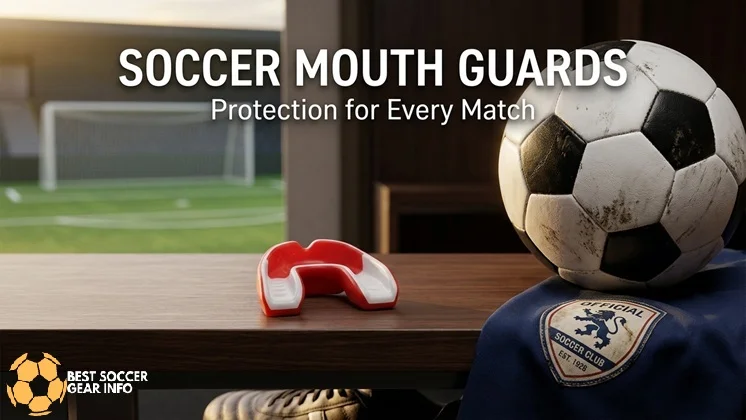
A soccer mouth guard, also called a mouthguard, mouthpiece, or sports mouth protector, is a removable protective device worn over the teeth during athletic activity.
Its main purpose is to create a protective barrier between the teeth, lips, cheeks, and forces that can occur during play. The American Dental Association (ADA) recommends properly fitted mouthguards for sports and recreational activities where there is a meaningful risk of dental or orofacial injury, and specifically lists soccer among the sports for which mouthguard use is recommended.
A soccer mouthguard is different from a nighttime grinding guard. A sports mouthguard is designed for protection during physical activity rather than primarily for preventing tooth wear from nighttime clenching or grinding.
Do Soccer Players Wear Mouthguards?
Yes, some soccer players wear mouthguards, but many do not.
Unlike sports where mouthguards are specifically required by certain U.S. governing bodies, soccer generally does not require every player to wear one. The ADA notes that mouthguard use is often limited when a sport does not require it, even though dental injuries can occur in sports that are not traditionally viewed as high-contact.
This applies across different levels:
| Soccer setting | Mouthguard use |
| Youth soccer | Optional in many competitions, but protective use may be recommended |
| Recreational soccer | Usually optional |
| School soccer | Depends on applicable school or competition rules |
| Club soccer | Usually optional unless competition rules say otherwise |
| College soccer | Generally not a universal requirement |
| Professional soccer | Players may choose to wear one |
| Goalkeepers | May wear one, but it is not generally compulsory |
The exact rules for a particular youth league, school, tournament, or competition can differ, so players should check that competition’s regulations.
Are Mouth Guards Allowed in Soccer?
Generally, a properly fitted, non-dangerous mouthguard is compatible with the Laws of the Game.
IFAB Law 4 says players must not use equipment that is dangerous. It also permits non-dangerous protective equipment.
A mouthguard therefore should not be confused with prohibited equipment simply because it is protective.
For organized soccer, however, the competition or league can have additional equipment requirements. A referee can also require equipment considered dangerous or unauthorized to be removed.
Do You Need a Mouthguard for Soccer?
Soccer does not universally require a mouthguard, but wearing one can be a sensible way to protect your teeth during play.
The ADA identifies soccer as a sport where mouthguard use is recommended and states that properly fitted mouthguards can reduce the incidence and severity of sports-related dental injuries.
The decision can be particularly relevant for players who:
- regularly play competitive soccer
- frequently challenge for the ball
- have previously experienced dental injuries
- have braces or other orthodontic appliances
- are concerned about protecting their teeth and mouth
For children and teenagers, a dentist or orthodontist can help determine what type of mouthguard is appropriate.
Why Don’t Soccer Players Wear Mouthguards?
There isn’t one reason.
Some players may simply not consider a mouthguard necessary because soccer is not usually perceived as a collision sport to the same extent as American football or boxing. Others may dislike the sensation, speech changes, fit, or inconvenience.
The ADA identifies lack of a requirement, cost, and lack of awareness of the potential benefits among reasons athletes may not use mouthguards.
So the fact that many professional or recreational players don’t wear mouthguards does not mean mouthguards have no protective purpose.
Do Professional Soccer Players Wear Mouthguards?
Some professional soccer players do wear mouthguards, but they are not universally worn by professional players.
There is no general IFAB requirement that professional soccer players wear mouthguards. Under Law 4, the key equipment principle is that equipment must not be dangerous.
It is therefore possible to see professional players wearing mouthguards while others play without them.
Claims about whether a particular famous player—such as Messi or Ronaldo—wears one should be based on identifiable footage or a reliable statement rather than assuming that every professional player follows the same practice.
Do Soccer Goalies Wear Mouthguards?
Yes, soccer goalkeepers can wear mouthguards.
There is no general rule requiring goalkeepers to wear them, but goalkeepers can still experience contact around the face and mouth during challenges, dives, and crowded situations.
A goalkeeper who chooses a mouthguard should use one that fits securely and does not create a dangerous protrusion or interfere unnecessarily with breathing or communication.
Do Kids Need Mouthguards for Soccer?
A mouthguard can be appropriate for a child who plays soccer, particularly when there is a meaningful risk of contact or dental injury.
The American Academy of Pediatric Dentistry supports properly fitted mouthguards in organized sports that carry a risk of orofacial injury.
The ADA also recommends properly fitted mouthguards for sports including soccer.
For a child, fit matters because teeth and jaws change as they grow. Parents can ask a dentist or pediatric dentist about the appropriate type and fit.
Soccer Mouthguards for Braces
Players with braces should pay particular attention to mouthguard fit.
Yes, you can wear a mouthguard with braces, but it should be designed or fitted appropriately for orthodontic appliances.
The American Association of Orthodontists (AAO) specifically recommends mouthguard protection for athletes with braces and notes that a properly fitted mouthguard can cover braces and help protect against dental trauma.
An orthodontic mouthguard should provide enough room around brackets and wires rather than pressing directly against them.
If you have braces, ask your orthodontist which mouthguard design is appropriate before buying one.
Types of Soccer Mouthguards
Soccer mouthguards generally fall into three broad categories.
| Type | How it fits | Main consideration |
| Stock mouthguard | Pre-formed | Convenient but typically less personalized |
| Boil-and-bite | Softened in hot water and molded to the teeth | Better fit than a basic stock guard when correctly fitted |
| Custom mouthguard | Made specifically for the player’s mouth | Personalized fit and retention |
The ADA recognizes both custom-fit mouthguards and appropriately fitted boil-and-bite mouthguards as options, depending on the athlete’s circumstances.
For players with orthodontic appliances, professional guidance becomes more important because the mouthguard needs to accommodate changes in the teeth and appliances.
What Should You Look for in a Soccer Mouthguard?
A good soccer mouthguard should primarily fit securely, remain comfortable during activity, and provide appropriate coverage.
Consider:
1. Fit
A mouthguard should remain in position rather than constantly falling out or requiring you to bite down hard to hold it there.
The ADA says an ideal mouthguard should be properly fitted and adapted to the wearer’s oral structures.
2. Retention
Good retention is particularly important during running and contact because you don’t want the guard moving around unnecessarily.
3. Comfort
A mouthguard that feels excessively bulky may make an athlete less likely to use it consistently.
4. Coverage
The guard should provide appropriate protection for the teeth and soft tissues without creating unnecessary bulk.
5. Orthodontic compatibility
If you have braces, retainers, or other orthodontic appliances, choose a design intended for your situation and ask your orthodontist if necessary.
6. Durability
Inspect the mouthguard regularly. Cracks, significant chewing damage, or changes in fit are reasons to have it evaluated or replaced.
What Is the Thinnest Mouthguard for Sports?
There is no single universal “thinnest” mouthguard that is best for every soccer player.
Thinner does not automatically mean better. Reducing material can affect protection, fit, durability, and comfort.
Instead of choosing solely by thickness, consider whether the mouthguard is designed for sports, fits securely, and provides adequate protection for your particular needs.
For someone with braces, the correct orthodontic fit is more important than simply finding the thinnest possible design.
What About Custom Soccer Mouthguards?
Custom mouthguards are made to fit an individual’s mouth rather than using a generic shape.
Their main potential advantage is personalized fit and retention. The ADA recognizes custom-fit mouthguards as one of the options for athletes.
They can be particularly worth discussing with a dental professional when:
- you wear braces
- you have unusual dental anatomy
- you have experienced previous dental trauma
- standard mouthguards repeatedly lose their fit
- comfort and retention are major concerns
What Is a Mouthguard With a Strap?
A mouthguard with a strap is designed with an attachment that connects the mouthguard to another piece of equipment or helps keep it accessible when removed.
For soccer, the attachment should not create a dangerous protrusion or introduce an unnecessary hazard. IFAB Law 4 requires player equipment to be safe and prohibits dangerous equipment.
A simple mouthguard without an external strap is often sufficient for soccer, particularly when the guard already has good retention.
What About Shock Doctor Mouthguards?
Shock Doctor is a brand that sells sports mouthguards and related protective equipment. A branded product should still be evaluated according to the same basic criteria: fit, retention, intended use, comfort, and compatibility with braces or other dental appliances.
If you are comparing products for an affiliate section, check the manufacturer’s current specifications rather than relying on an old product description because models and designs can change.
How to Clean a Soccer Mouthguard
A mouthguard goes inside your mouth, so cleaning and storage matter.
A simple routine is:
- Rinse it after use.
- Clean it according to the manufacturer’s instructions.
- Allow it to dry thoroughly.
- Store it in a ventilated protective case.
- Inspect it regularly for damage or changes in fit.
- Replace it when it becomes damaged or no longer fits properly.
The AAO recommends rinsing mouthguards, cleaning them regularly, avoiding high temperatures, using a ventilated container, and inspecting them for wear.
Can You Soak a Mouthguard in Mouthwash?
Don’t assume that any mouthwash is appropriate for soaking a mouthguard.
Follow the manufacturer’s cleaning instructions instead. Some products can be affected by chemicals or prolonged soaking, while other cleaning methods may be recommended.
Avoid hot water unless the manufacturer’s instructions specifically call for it, because heat can alter the shape of a mouthguard.
Soccer Mouthguards vs. Jaw Guards
The terms jaw guard, jaw protector, and mouthguard are sometimes used interchangeably in searches, but they do not necessarily describe the same product.
A conventional soccer mouthguard primarily protects the teeth and oral structures. It should not be assumed to provide comprehensive protection against every type of jaw or facial injury.
Similarly, a mouthguard should not be marketed as a guaranteed concussion-prevention device. The ADA notes that research on whether mouthguards reduce concussion incidence remains inconclusive and that further research is needed.
Do Soccer Players Wear Chin Guards?
Some online searches use phrases such as “chin guard” or “jaw guard” when referring to facial protection.
A standard soccer mouthguard is not the same thing as a chin guard or face mask. Soccer’s Laws of the Game permit certain non-dangerous protective equipment, but equipment must meet the safety requirements of Law 4.
If a particular piece of facial equipment is unusual or extends beyond the normal mouth area, the player should confirm its legality with the applicable competition and referee.
Should Soccer Players Wear Mouthguards?
Mouthguards are a reasonable protective option for soccer players because dental injuries can occur in soccer, and major dental organizations recommend properly fitted mouthguards for sports with a risk of oral injury.
The choice is different from saying that every soccer player is required to wear one.
For a player deciding whether to use one, the relevant questions are:
- How much contact occurs in the player’s games?
- Is the player a child or adult?
- Are braces or other dental appliances present?
- Has the player previously experienced dental injury?
- Does the competition have specific equipment rules?
- Does the mouthguard fit securely and comfortably?
Common Soccer Mouthguard Mistakes
Wearing a poorly fitting guard
A loose mouthguard may provide less useful protection and can be distracting during play.
Using a night guard for soccer
A night guard and sports mouthguard are designed for different purposes. A night guard should not automatically be substituted for athletic protection.
Ignoring braces
Players with braces should use a mouthguard appropriate for orthodontic treatment and discuss the choice with their orthodontist.
Choosing solely by price
Price alone does not tell you whether a mouthguard fits correctly or is suitable for the intended sport.
Leaving it in a hot car
High temperatures can deform some mouthguards.
Never inspecting the guard
A damaged or loose mouthguard may need replacement.
Frequently Asked Questions
You can wear one in soccer, provided it is safe and permitted under the applicable competition rules. Mouthguards are not generally compulsory under the IFAB Laws of the Game.
Yes. Some recreational, youth, amateur, college, and professional players wear mouthguards, while others do not.
Some do, but mouthguards are not universally worn by professional soccer players.
Yes, goalkeepers can wear mouthguards. There is no general requirement that every goalkeeper wear one.
Some youth players do. Dental organizations support properly fitted mouthguards for organized sports that carry a risk of orofacial injury.
A mouthguard can provide useful dental protection for children who play soccer. Parents can discuss the appropriate type and fit with a dentist or pediatric dentist.
A properly fitted, non-dangerous mouthguard is generally compatible with the Laws of the Game. IFAB Law 4 prohibits dangerous equipment, while non-dangerous protective equipment is permitted.
Yes. The AAO says athletes can play sports during orthodontic treatment but should wear an appropriate mouthguard and discuss the type with their orthodontist.
There isn’t one universally best mouthguard for every player. Fit, retention, protection, comfort, orthodontic compatibility, and the player’s circumstances are more useful criteria than choosing a single model for everyone.
A mouthguard’s primary established purpose is protection against dental and orofacial injury. Evidence about mouthguards preventing concussions is not conclusive, so they should not be treated as a guaranteed concussion-prevention device.
Soccer does not universally require them, and athletes may have concerns about comfort, fit, cost, convenience, or simply underestimate the possibility of dental injury.
Some searches use “jaw guard” to describe mouth protection, but a standard mouthguard is not necessarily a dedicated jaw-protection device. The two terms should not automatically be treated as identical.
If this refers to a player putting a hand over their mouth during play, that is a different issue from wearing a mouthguard. IFAB’s equipment rules concern what players wear or use as equipment; they do not establish a general rule that players cannot temporarily cover their mouths with their hands.
Bottom Line
Soccer players can wear mouthguards, and properly fitted mouthguards can help protect against dental and orofacial injuries. They are particularly worth considering for players who regularly experience contact and for athletes with braces.
They are not universally required equipment in soccer, however. IFAB’s current Law 4 focuses on safety and allows non-dangerous protective equipment, while specific competitions can have their own regulations.
For children or players undergoing orthodontic treatment, getting advice from a dentist or orthodontist can help determine the appropriate mouthguard and fit.