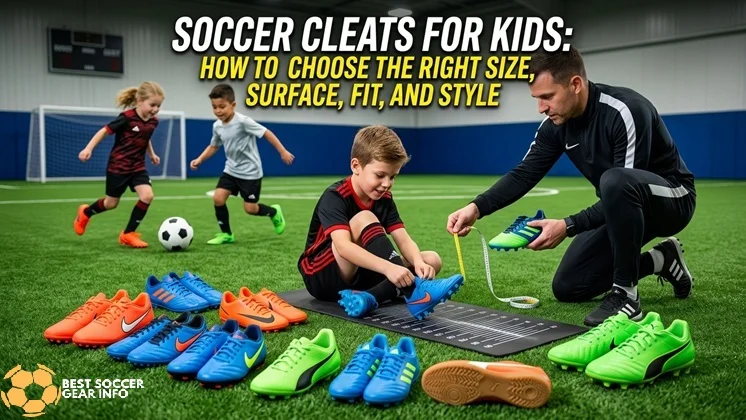
Choosing soccer cleats for kids is mainly about fit, playing surface, traction, comfort, and the child’s age and foot shape. The right pair should feel snug without squeezing the foot, keep the heel secure, and use an outsole designed for the field or court where the child actually plays.
Kids’ soccer cleats are available in toddler, little-kid, and big-kid sizes, with options from brands such as Nike, adidas, PUMA, and New Balance. They are also available for firm natural grass, artificial grass, turf, and indoor soccer.
What Are Kids’ Soccer Cleats?
Kids’ soccer cleats are soccer-specific shoes designed for young players. Unlike ordinary athletic shoes, they have an outsole designed to provide traction on a particular playing surface.
The most important distinction is where the child will play:
| Playing surface | Appropriate soccer footwear |
| Natural grass | Firm-ground (FG) cleats |
| Long-bladed artificial grass | Artificial-ground or multi-ground footwear, depending on the manufacturer’s specification |
| Short artificial turf | Turf soccer shoes |
| Indoor hard court | Indoor soccer shoes with a flat rubber outsole |
| Futsal court | Indoor/futsal shoes with a flat rubber outsole |
Using the correct outsole matters more than choosing a particular brand. adidas similarly recommends matching kids’ soccer footwear to the playing surface, with firm-ground footwear for natural grass, turf shoes for short-bladed turf, and indoor shoes with flat rubber outsoles for hard indoor surfaces.
What Size Soccer Cleats Do Kids Need?
There is no single soccer-cleat size based only on a child’s age. Measure the child’s foot and compare the measurement with the specific manufacturer’s size chart.
US kids’ soccer footwear commonly uses C (child) and Y (youth) sizing. Current Nike kids’ soccer listings, for example, include sizes from 2C through 13.5C and then 1Y through 6Y, depending on the model.
That means searches such as soccer cleats kids size 12, size 13, size 1, size 2, and size 3 generally refer to points along the children’s/youth sizing progression rather than five different types of cleats.
Common Kids’ Soccer Cleat Sizes
| Size terminology | What it generally indicates |
| 12C | Child-size footwear |
| 13C | Larger child size |
| 1Y | Youth size |
| 2Y | Youth size |
| 3Y | Youth size |
| 4Y–6Y | Larger youth sizes, available in some models |
Important: A “12” or “13” without the C/Y designation can be ambiguous. Always check whether the manufacturer means 12C, 13C, 1Y, 2Y, or another sizing system.
Nike’s current kids’ soccer range demonstrates how sizing can extend from small children’s sizes into youth sizes, but availability differs between models.
How Should Kids’ Soccer Cleats Fit?
Kids’ soccer cleats should be snug but not painfully tight. The heel should stay securely in place, the foot should not slide around inside the shoe, and the toes should have enough room to move comfortably.
A good fit has:
- A secure heel with minimal slipping
- A snug midfoot
- No painful pressure points
- Enough room for comfortable toe movement
- No excessive empty space in front of the toes
- No pinching across the widest part of the foot
adidas advises that a properly fitted cleat should hold the foot snugly while allowing the child to wiggle their toes comfortably. Nike’s kids’ fit guidance similarly emphasizes a snug rather than overly tight fit and recommends measuring feet while wearing soccer socks.
Should You Buy Kids’ Soccer Cleats Bigger?
Avoid buying cleats several sizes too large simply because a child’s feet are growing.
Extra space can allow the foot to move inside the shoe and make ball control and running less comfortable. At the same time, buying a cleat that is already too small can create pressure and discomfort.
The better approach is to measure the child’s feet and use the manufacturer’s current size chart.
How to Measure a Child’s Feet for Soccer Cleats
For a more accurate fit:
- Have the child stand on a sheet of paper.
- Wear the soccer socks they normally use.
- Mark the heel and the longest toe.
- Measure the foot from heel to toe.
- Measure both feet.
- Use the larger foot when checking the manufacturer’s chart.
- Compare the measurement with the specific brand and model’s sizing information.
Nike provides a soccer-cleat size chart and explains that the CM number printed on a shoe box is not necessarily the same thing as measured foot length in centimeters, so parents should use the manufacturer’s actual sizing instructions rather than treating every CM number as a direct foot measurement.
Soccer Cleats for Toddlers
Toddler soccer footwear is designed for very young players and generally uses smaller children’s sizing.
For toddlers, prioritize:
- A comfortable fit
- Easy entry and adjustment
- A secure heel
- Lightweight construction
- Appropriate traction for the playing surface
- Enough flexibility for normal movement
Not every toddler needs traditional outdoor cleats. If a young child is playing indoors, a flat-soled indoor soccer shoe may be more appropriate than a studded outdoor cleat.
Soccer Cleats for Kids: Boys vs. Girls
Soccer cleats are not fundamentally divided into separate performance categories for boys and girls.
A child should generally choose footwear based on:
- Foot length
- Foot width
- Fit
- Playing surface
- Comfort
- Preferred shoe construction
- League requirements
Nike’s current kids’ soccer range includes both boys and girls as shopping filters, while the underlying footwear choices are organized around sizes, surfaces, models, and other characteristics.
So a girl can wear the same soccer-cleat model as a boy if the size, fit, surface, and personal preference are appropriate.
Pink soccer cleats, for example, are simply a color/style preference rather than a different type of soccer footwear.
Nike Soccer Cleats for Kids
Nike offers kids’ soccer footwear across several product families and surfaces.
Current Nike listings include children’s and youth options such as Mercurial, Phantom, and Tiempo models, with different versions for firm ground, multi-ground, turf, and indoor/court play. Current listed examples range from lower-priced Club models to higher-priced Pro models.
Nike’s current kids’ soccer selection also includes sizes ranging from small children’s sizes through youth sizes, although the exact sizes depend on the individual model.
Nike Soccer Cleats Kids: What to Check
When comparing Nike cleats for a child, check:
- Surface designation
- Available C/Y size
- Foot length
- Width and overall fit
- Low- or high-top construction
- Stud configuration
- Price
- Whether the model is intended for training, matches, indoor play, turf, or outdoor fields
Nike’s fit guidance recommends a snug fit and matching the boot to the playing surface.
Adidas Soccer Cleats for Kids
adidas offers kids’ soccer footwear for outdoor grass, artificial surfaces, turf, and indoor play.
Its youth soccer range includes families such as Predator and Copa, with different outsole constructions for different surfaces.
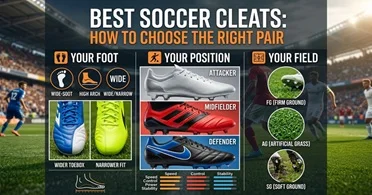
For kids, adidas recommends considering both the playing surface and the child’s role on the field when selecting footwear.
When shopping for adidas soccer cleats for kids, check the manufacturer’s current kids’ size guide rather than assuming that a Nike, PUMA, or other brand size will fit identically.
PUMA Soccer Cleats for Kids
PUMA also produces youth soccer footwear in different models, fits, colors, and outsole configurations.
When comparing PUMA soccer cleats for kids, use the same decision process:
- Identify the playing surface.
- Measure the child’s foot.
- Check the PUMA size chart.
- Check the width and fit.
- Compare the outsole.
- Consider price and how frequently the child plays.
Brand name alone should not determine the choice. A correctly sized cleat designed for the child’s playing surface is more useful than a more expensive model that does not fit properly.
F50 Soccer Cleats for Kids
The adidas F50 family is associated with lightweight soccer footwear and is available in youth versions.
When a child is considering an F50 model, the important questions are still:
- Is the available size correct?
- Is the outsole appropriate for the field?
- Does the shoe fit the child’s foot?
- Is the model appropriate for the child’s level of play?
- Does the price make sense for how often the child plays?
Different F50 versions can have different constructions and price points, so the exact model should be checked rather than treating every F50 as identical.
Messi Soccer Cleats for Kids
Messi-branded soccer footwear is available in children’s and youth ranges.
For a child who wants Messi soccer cleats, treat the player’s preferred design or athlete branding as a secondary consideration. The fundamental selection criteria remain surface, size, fit, comfort, and outsole.
A Messi-branded cleat does not automatically make it suitable for every field.
Laceless Soccer Cleats for Kids
Laceless or laceless-style soccer cleats can provide a streamlined upper and may appeal to children who prefer that type of construction.
However, laceless does not mean that the shoe will fit every foot better.
Check:
- Heel security
- Midfoot security
- Width
- Toe room
- Ease of putting the shoe on
- Whether the child can comfortably maintain the fit during play
If a laceless shoe is difficult for the child to put on or does not hold the foot securely, a conventional laced model may be easier to fit.
Wide Soccer Cleats for Kids
Children with wider feet should not simply move up a full size to create extra width.
A longer cleat can create excessive space in front of the toes while still feeling tight across the widest part of the foot.
Instead, look for models or brands that offer a more suitable width or upper construction. adidas notes that children’s foot width is an important consideration and that some brands offer wider or narrower fits.
When testing a wide-foot cleat, check whether:
- The little toe is being squeezed
- The sides of the foot feel compressed
- The upper creates pressure across the forefoot
- The heel remains secure
- The child can move the toes comfortably
Indoor Soccer Cleats for Kids
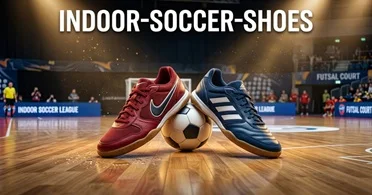
Indoor soccer generally requires a different outsole from outdoor grass soccer.
Indoor soccer shoes normally use a flat rubber outsole rather than outdoor studs. adidas specifically describes indoor soccer shoes as having flat rubber outsoles for traction on hard, non-turf surfaces.
This is why outdoor FG cleats should not automatically be used for indoor courts.
For indoor soccer, look for:
- Flat rubber outsole
- Appropriate indoor traction
- Secure fit
- Comfortable upper
- Adequate flexibility
- Proper size
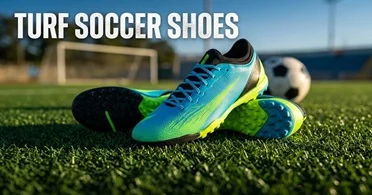
Turf Soccer Shoes for Kids
Turf shoes are designed for shorter artificial playing surfaces and typically use many small rubber traction elements rather than traditional outdoor studs.
They are different from both traditional firm-ground cleats and flat indoor shoes.
Before buying, identify whether the child’s field is:
- Natural grass
- Long-bladed artificial grass
- Short artificial turf
- Indoor court
Then select the footwear designed for that surface.
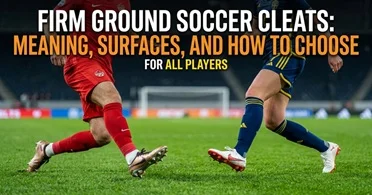
Firm-Ground Soccer Cleats for Kids
Firm-ground (FG) cleats are intended primarily for natural grass surfaces that are firm rather than muddy.
They use molded studs designed to provide traction while the player runs and changes direction.
Nike describes firm-ground sole plates as suitable for short, dry or slightly damp natural grass rather than muddy conditions.
For a child who primarily plays outdoor youth soccer on natural grass, FG may be the appropriate category, subject to the field and league requirements.
How Much Do Kids’ Soccer Cleats Cost?
The price of kids’ soccer cleats varies considerably by brand, model, construction, and product tier.
As a current example, Nike’s kids’ soccer listings include models around $35–$65 at lower and mid-level price points, while some higher-tier youth models are listed at approximately $80–$150. Prices and availability can change with sales, sizes, colors, and new releases.
A useful way to think about soccer cleats kids price is by product tier rather than assuming that the most expensive pair is necessary:
| Price consideration | What to look for |
| Lower-priced | Basic construction and essential traction |
| Mid-range | More model and material choices |
| Higher-priced | Premium versions, materials, or technology |
For a rapidly growing child, consider how frequently the cleats will be used and how quickly the child may outgrow them before paying substantially more for a premium model.
What Features Matter Most in Kids’ Soccer Cleats?
The most important features are generally:
1. Correct fit
The cleat should be secure without being painfully tight.
2. Correct outsole
The outsole should correspond to the playing surface.
3. Appropriate width
The shoe should accommodate the child’s foot without excessive pressure.
4. Secure heel
The heel should not repeatedly slide up and down during movement.
5. Comfortable upper
The material should not create uncomfortable pressure points.
6. Suitable weight and construction
Children do not necessarily need the most technologically advanced or expensive cleat.
7. League requirements
Always check the child’s league or tournament rules if there are specific footwear restrictions.
How Do You Choose Soccer Cleats for Kids?
Use this simple sequence:
Step 1: Identify the surface.
Determine whether the child plays on natural grass, artificial grass, turf, or an indoor court.
Step 2: Measure both feet.
Use the larger foot as the reference when checking the manufacturer’s sizing information.
Step 3: Check width.
Do not assume that a longer size will solve a width problem.
Step 4: Check the fit.
The shoe should feel snug and secure without painful pressure.
Step 5: Compare outsole types.
Make sure the sole is designed for the actual playing surface.
Step 6: Compare price.
Consider the child’s playing frequency and expected growth.
Step 7: Check the league requirements.
If the child plays organized soccer, confirm that the footwear complies with the league’s rules.
Are Soccer Cleats and Baseball Cleats the Same?
No. Soccer and baseball cleats are designed around different sports and movement requirements.
Soccer involves continuous running, cutting, kicking, and ball control. Baseball cleats are designed for baseball-specific movements and field conditions.
Do not assume that a baseball cleat is interchangeable with a soccer cleat simply because both have studs.
Can Kids Use Baseball Cleats for Soccer?
A child should use soccer-specific footwear when playing soccer unless the relevant league explicitly permits another type of shoe.
The outsole and stud arrangement matter because soccer players need to move in multiple directions while also controlling and kicking the ball.
For organized youth soccer, check the competition’s equipment rules before purchasing footwear.
Where Can You Buy Soccer Cleats for Kids?
Parents can generally shop for kids’ soccer cleats through:
- Sporting-goods stores
- Soccer specialty stores
- Brand-owned online stores
- General online retailers
- Local stores near the child’s soccer club or field
For searches such as soccer cleats kids nearby, soccer cleats kids near me, or where to buy kids’ soccer cleats, local availability can be useful because trying on cleats is one of the easiest ways to identify fit problems.
If buying online, check the retailer’s current size chart and return policy before ordering.
Common Mistakes When Buying Kids’ Soccer Cleats
Buying several sizes too large
Children grow quickly, but excessive extra space can compromise the fit.
Choosing based only on appearance
A favorite color or player-inspired design does not determine whether the outsole or fit is appropriate.
Ignoring the playing surface
FG cleats, turf shoes, and indoor soccer shoes serve different purposes.
Assuming every brand fits the same
A child’s size in one brand should not automatically be transferred to another brand.
Ignoring foot width
Moving up in length is not a reliable substitute for choosing a better-fitting width.
Buying without checking the league rules
Some leagues have specific equipment requirements or restrictions.
Frequently Asked Questions
The appropriate soccer cleat depends on the child’s foot, playing surface, size, comfort, and budget. There is no single model that is best for every child.
Measure the child’s foot and compare the result with the manufacturer’s current size chart. Do not select a size solely from age.
In U.S. children’s sizing, 12C is a child size. The exact fit should be confirmed using the manufacturer’s size chart.
13C is generally a larger child size in U.S. children’s footwear. Some brands then transition to youth sizing such as 1Y.
Yes. Sizes such as 1Y, 2Y, and 3Y are commonly used in youth soccer footwear. Exact availability varies by brand and model.
They should be snug and secure, but not painfully tight. The heel should stay in place and the child should have comfortable toe movement.
Yes. Measuring while wearing the type of soccer socks the child normally uses can produce a more useful fit measurement. Nike specifically recommends measuring children’s feet while wearing football/soccer socks.
Look for models and brands that accommodate a wider foot rather than simply buying a longer size. Check the manufacturer’s fit information and try the cleat on when possible.
Nike offers a broad range of kids’ soccer footwear in different sizes, surfaces, models, and price tiers. The appropriate choice depends on the individual child and model.
Adidas offers youth soccer footwear for natural grass, artificial surfaces, turf, and indoor play. Choose the model according to the child’s surface, size, fit, and playing needs.
Yes. Indoor soccer shoes generally have flat rubber outsoles rather than outdoor studs.
Traditional outdoor cleats are not the same as indoor soccer shoes. For hard indoor courts, a flat rubber indoor outsole is generally the appropriate footwear category.
No. Turf footwear is designed for shorter artificial surfaces, while firm-ground cleats are primarily designed for natural grass.
Focus on surface, size, fit, width, heel security, comfort, price, and league requirements.
Replace them when they no longer fit correctly, become significantly worn, damaged, or no longer provide an appropriate outsole for the child’s playing conditions. Growing children may also need a new pair simply because their feet have increased in size.
Final Takeaway
The right soccer cleats for kids are not necessarily the most expensive or most popular pair. Start with the playing surface, then measure the child’s feet, check the manufacturer’s size chart, evaluate width and heel security, and choose a comfortable fit.
For natural grass, look at the appropriate firm-ground category. For artificial surfaces, check whether the field requires artificial-ground, multi-ground, or turf footwear. For indoor soccer, choose a flat rubber indoor outsole.
Nike, adidas, PUMA, New Balance, F50, Messi-inspired models, laceless designs, and other options can all be considered—but the child’s fit and playing surface should determine the final category.