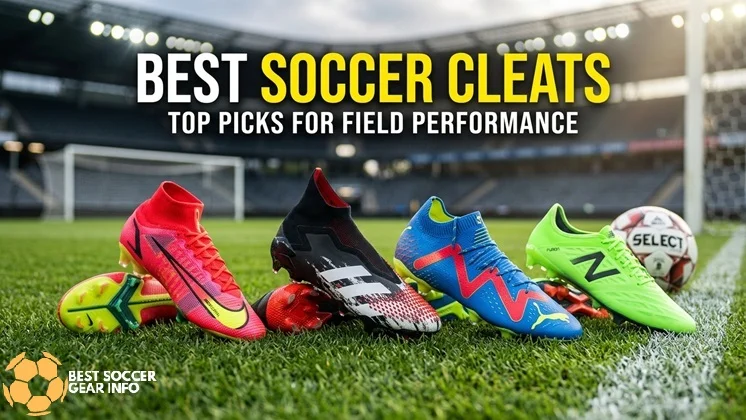
If you are looking for the best soccer cleats, there is no single pair that is best for every player. The right choice depends mainly on playing surface, fit, foot shape, position, playing style, and budget.
For natural grass, start by looking at firm-ground (FG) cleats. For artificial grass, look for AG or MG options; for short-bladed turf, turf-specific shoes with rubber nubs are designed for that surface. Indoor soccer requires a flatter indoor outsole.
The most useful way to narrow the choices is:
| Your priority | What to look for |
| Speed | Lightweight construction and aggressive traction |
| Shooting/striking | Stable platform and a responsive upper |
| Ball control | Upper with a close, consistent ball feel |
| Comfort | More forgiving fit and cushioning |
| Wide feet | Natural/wider fit rather than an aggressively tapered boot |
| Beginners | Comfortable, affordable cleats with the correct outsole |
| Kids | Correct youth sizing, fit and appropriate surface |
| Natural grass | FG |
| Artificial grass | AG or suitable MG |
| Short artificial turf | TF/turf |
| Indoor | IN/indoor outsole |
What Are Soccer Cleats?
Soccer cleats are purpose-built shoes with a soccer-specific outsole designed to provide traction while running, accelerating, cutting and changing direction.
Unlike ordinary athletic shoes, soccer cleats are designed around the interaction between the foot, ball, ground and outsole. Their construction normally includes:
- Upper
- Toe box
- Heel counter
- Midsole or cushioning layer
- Outsole/sole plate
- Studs or rubber lugs
- Lacing system or laceless construction
- Insole
The outsole is especially important because the same cleat is not appropriate for every field.
Best Soccer Cleats by Playing Surface
Choosing the outsole should come before choosing a brand or color.
Firm Ground (FG)
FG cleats are primarily designed for natural-grass fields that are firm, relatively short and not muddy. They commonly use fixed conical or bladed studs to provide traction.
FG is the most common choice for players who primarily play on conventional natural-grass soccer fields.
Artificial Grass (AG)
AG cleats are designed specifically for artificial-grass surfaces. They generally use a stud configuration suited to the harder, more consistent surface.
If you regularly play on modern artificial grass, an AG outsole deserves serious consideration rather than automatically buying FG.
Multi-Ground (MG)
MG stands for multi-ground. These cleats are designed to provide versatility across different outdoor surfaces.
They can make sense for players who regularly move between natural grass and artificial surfaces rather than playing exclusively on one type of field.
Turf (TF)
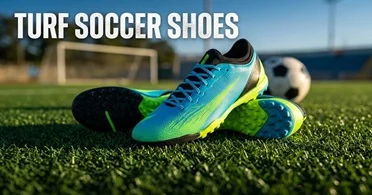
Turf soccer shoes use many small rubber nubs rather than traditional penetrating studs. They are intended for short-bladed artificial turf and provide traction without the deeper penetration associated with grass cleats.
Do not choose turf shoes simply because a field is called “artificial.” Artificial grass and short-bladed turf can require different footwear.
Indoor (IN)
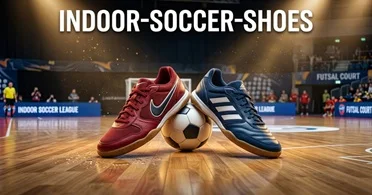
Indoor soccer shoes are designed for flat indoor surfaces and use a flatter outsole rather than grass studs. adidas and Nike both separate indoor footwear from their outdoor cleat categories.
Soft Ground (SG)
Soft-ground cleats are intended for wetter or softer natural pitches and may use removable studs. They are a specialized option rather than an everyday choice for most recreational players.
Best Soccer Cleats for Men
The best men’s soccer cleats depend more on fit, surface and playing style than simply being labeled men’s.
For example, a player who spends most of the season on natural grass may need FG cleats, while someone who plays mainly on artificial grass may be better served by AG or MG footwear.
When comparing men’s cleats, consider:
- Playing surface
- Foot width
- Preferred fit
- Position
- Playing style
- Frequency of play
- Budget
- Required level of performance
A men’s cleat should feel secure without creating painful pressure points.
Best Soccer Cleats for Wide Feet
Wide-footed players should prioritize the shape and fit of the cleat instead of choosing a model solely because it is popular.
Nike, for example, distinguishes between natural and contoured fit preferences and identifies its Tiempo and Phantom families as having a more natural fit, while Mercurial uses a more contoured approach.
When shopping for wide feet:
- Look for a less tapered toe box.
- Avoid excessive pressure across the forefoot.
- Check the manufacturer’s current fit guidance.
- Try the cleats with the socks you actually play in.
- Make sure your toes can move comfortably.
- Do not assume going up a full size will solve a width problem.
Width and length are different problems. A shoe that is too narrow should not automatically be solved by buying a much longer shoe.
Best Soccer Cleats for Beginners
Beginners usually do not need the most expensive elite-level cleat.
A sensible beginner cleat should provide:
- Correct surface compatibility
- Comfortable fit
- Adequate traction
- Reasonable durability
- Easy break-in
- A price that matches the player’s level of commitment
Nike currently separates its soccer footwear into Elite, Pro, Academy and Club tiers. Academy and Club are positioned toward developing and recreational players, while Elite is the top performance tier.
For someone learning the game, spending substantially more does not automatically make a cleat more appropriate.
Best Soccer Cleats for Kids
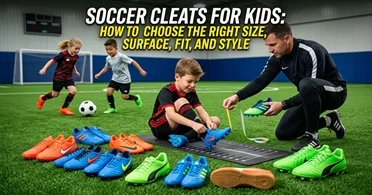
For kids, fit and the correct surface are more important than buying the most expensive model.
Youth players need room to move naturally without the foot sliding around inside the shoe.
When choosing kids’ soccer cleats:
- Measure the child’s feet regularly.
- Check both length and width.
- Avoid buying excessively large cleats so the child can “grow into them.”
- Match the outsole to the playing surface.
- Consider how frequently the child plays.
- Check whether the model is specifically available in the appropriate youth size.
Nike, for example, offers its Academy and Club tiers in both kids’ and adult sizes, while its Elite and Pro tiers are offered in adult sizes in its current guide.
Best Soccer Cleats for Speed
If speed is your priority, look for a cleat that combines low weight, secure lockdown and traction appropriate to the surface.
A lightweight cleat can feel quick, but weight alone does not determine how fast a player will be. The outsole has to provide appropriate traction, and the fit needs to keep the foot stable during acceleration.
Nike positions the Mercurial line around speed, while adidas positions its F50 line around lightweight construction and acceleration.
What matters for speed?
- Lightweight construction
- Secure heel lockdown
- Appropriate stud configuration
- Flexible construction
- Snug but comfortable fit
- Good ground contact
- Adequate traction
Avoid choosing a cleat simply because its marketing says “speed.”
Best Soccer Cleats for Strikers
Strikers may value cleats that provide a consistent ball feel, secure footing and confidence when shooting and changing direction.
A striker does not necessarily need a particular cleat category, however. Position-specific marketing should not override surface and fit.
For example, adidas describes its Predator family around precision, while Nike describes Phantom around precision and ball skills.
For a striker, examine:
- Ball-contact surface
- Upper texture
- Lockdown
- Traction during acceleration
- Stability during shooting
- Overall comfort
Best Soccer Cleats for Defenders
Defenders frequently need a combination of:
- Stable footing
- Reliable traction
- Secure lockdown
- Comfort during long sessions
- Protection appropriate to their playing environment
There is no special “defender cleat” that every defender needs. A defender playing on artificial grass may require a completely different outsole from a defender playing on natural grass.
Best Soccer Cleats for Midfielders
Midfielders often cover significant ground and repeatedly transition between attacking and defensive movements.
A useful midfield cleat should therefore balance:
- Comfort
- Traction
- Stability
- Agility
- Ball feel
- Weight
Rather than choosing based only on position, consider the specific role. A defensive midfielder may value stability differently from a highly attacking midfielder.
Best Soccer Cleats for Flat Feet
Players with flat feet should pay particular attention to fit, comfort and the shape of the shoe.
There is no universal cleat that is automatically best for every person with flat feet.
Look for:
- A comfortable base
- Adequate room across the foot
- Secure heel fit
- No painful pressure points
- A shape that matches your foot
- An appropriate insole if needed
If you require specialized orthotic support, check whether the cleat’s insole can be removed and whether your orthotic is compatible with the shoe.
Nike vs. adidas Soccer Cleats
Nike and adidas both offer multiple soccer-cleat families aimed at different playing styles.
| Brand/family | General positioning |
| Nike Mercurial | Speed-oriented |
| Nike Phantom | Precision and ball skills |
| Nike Tiempo | Comfort, touch and control |
| adidas F50 | Speed and acceleration |
| adidas Predator | Precision and control |
| adidas Copa | Comfort and touch |
These descriptions reflect how the manufacturers position their current product families, not a universal performance ranking.
The better choice for an individual player can therefore change based on foot shape, surface, position and personal preference.
Best Nike Soccer Cleats
Nike’s current soccer footwear guide centers on three major families:
Mercurial
Mercurial is designed around speed and explosive movement. Nike describes it as a lightweight option for players who prioritize fast plays.
Phantom
Phantom is positioned toward precision, ball skills and close control.
Tiempo
Tiempo emphasizes comfort, touch and a consistent feel on the ball.
Nike also divides its current footwear into Elite, Pro, Academy and Club performance tiers.
Best adidas Soccer Cleats
adidas currently highlights three major soccer families:
F50
The F50 is positioned toward speed, acceleration and quick movement.
Predator
Predator focuses on precision and ball control, particularly through textured upper elements.
Copa
Copa emphasizes comfort and touch and includes models with leather-inspired construction.
Again, the right choice depends on the individual player rather than the brand name alone.
Best Budget Soccer Cleats
A budget soccer cleat should not be judged only by its price.
The better question is:
Does the cleat provide the features you actually need for the surface and level of play?
A less expensive cleat can be perfectly suitable for recreational or beginner players.
When comparing budget options, prioritize:
- Correct outsole
- Comfortable fit
- Secure lockdown
- Durability
- Reasonable weight
- Return/exchange policy
- Actual playing requirements
You generally gain less by paying for unnecessary premium technology than by getting the right outsole and correct fit.
Best Cheap Soccer Cleats
“Cheap” and “budget” are not necessarily the same thing.
A cheap cleat can become expensive if it is uncomfortable, wears quickly or is unsuitable for your playing surface.
Before buying the lowest-priced option, check:
- Outsole type
- Upper construction
- Fit
- Available sizes
- Return policy
- Intended surface
- Player level
For a beginner who plays occasionally, an entry-level model can make much more sense than an expensive elite boot.
Best Leather Soccer Cleats
Leather soccer cleats remain attractive to players who prefer a traditional feel.
The appeal is usually associated with:
- Soft feel
- Comfort
- Natural-feeling touch
- A more traditional construction
The trade-off is that modern synthetic materials can provide different combinations of weight, structure, water resistance and consistency.
For example, adidas describes the Copa line as incorporating leather construction in some models.
When considering leather, check the specific model, because materials and construction can vary considerably between versions.
Best AG Soccer Cleats
For artificial grass, start with a dedicated AG outsole when available.
AG footwear is designed around the characteristics of artificial grass, whereas FG is primarily associated with natural firm ground. adidas explicitly distinguishes FG, AG and MG categories in its current buying guidance.
If you play on several surfaces, MG may be worth considering because it is designed as a more versatile outdoor option.
Best Turf Soccer Cleats
For short-bladed artificial turf, look for TF/turf shoes with small rubber nubs.
Turf footwear is designed to sit on top of the surface rather than penetrate it like traditional grass studs.
Do not confuse:
AG → artificial grass
with
TF → short-bladed artificial turf
They are not automatically interchangeable.
What Makes a Soccer Cleat Good?
The best soccer cleat has to satisfy several requirements at the same time.
1. Fit
The shoe should hold the foot securely without creating painful pressure.
2. Surface compatibility
The outsole should match the field.
3. Traction
The studs or lugs should provide appropriate grip without being excessive for the surface.
4. Ball feel
The upper should give you the level of touch you prefer.
5. Stability
The foot should remain secure during acceleration, deceleration and changes of direction.
6. Comfort
A technically impressive cleat is not useful if you cannot comfortably wear it through a full session.
7. Durability
Consider how frequently you play and the conditions in which you play.
How Should Soccer Cleats Fit?
A good fit should feel secure rather than painfully tight.
Your heel should not repeatedly slide out of the shoe, while your toes should have enough room to avoid uncomfortable compression.
Check:
- Heel lockdown
- Forefoot width
- Toe-box comfort
- Arch-area comfort
- Lacing
- Overall pressure
- Whether your foot moves inside the shoe
Nike’s current fit guidance distinguishes between natural and contoured preferences, showing why two players can prefer different shapes even when they wear the same numerical shoe size.
How to Choose the Best Soccer Cleats
Use this decision process.
Step 1: Identify your field
Natural grass → FG
Artificial grass → AG or appropriate MG
Short artificial turf → TF
Indoor court → IN
Surface should be your first filter.
Step 2: Identify your foot shape
Determine whether your foot is:
- Narrow
- Medium
- Wide
Then compare the manufacturer’s fit information.
Step 3: Identify your playing style
Ask whether you prioritize:
- Speed
- Control
- Touch
- Comfort
- Stability
- Agility
Step 4: Consider your position
Your position can influence what features you prefer, but it should not override surface and fit.
Step 5: Set your budget
Decide whether you actually need an elite-level model or whether an Academy, Club, entry-level or budget model meets your needs.
Step 6: Check the actual model
Do not judge a cleat solely from its product family. Different generations and tiers can have substantially different constructions.
What Are the Best Soccer Cleats of All Time?
There is no objective single answer to the best soccer cleats of all time.
Soccer footwear has changed considerably, and different generations emphasized different things. A classic leather boot, a modern lightweight speed boot and a precision-oriented synthetic boot can all serve very different purposes.
Instead of treating “best of all time” as a single ranking, compare historical cleats using:
- Fit
- Comfort
- Ball feel
- Weight
- Traction
- Durability
- Innovation
- Influence on soccer footwear
This produces a more meaningful comparison than simply declaring one model the greatest.
Best Place to Buy Soccer Cleats
The best place depends on what matters most to you.
For a first pair or difficult-to-fit feet, a retailer that allows you to try the cleats on and return or exchange them can be especially useful.
For online purchases, check:
- Return policy
- Size availability
- Seller reputation
- Product authenticity
- Shipping costs
- Warranty
- Whether the exact model and outsole are clearly identified
Do not buy based solely on a large discount if the retailer’s return policy is poor.
Best Insoles for Soccer Cleats
The stock insole is often sufficient for many players.
An aftermarket insole may be worth considering if you need a different level of cushioning, fit or support, but it should not make the cleat excessively tight.
Before replacing an insole, check:
- Whether the original insole is removable
- Available space inside the shoe
- Your desired level of cushioning
- Compatibility with your foot shape
- Whether the new insole changes the fit
If an insole makes your toes or forefoot feel cramped, the problem may be the combination of the insole and shoe rather than the insole alone.
Common Soccer Cleat Mistakes
Buying FG because it is the most common
The most common outsole is not necessarily the correct outsole for your field.
Choosing a shoe by brand alone
Nike and adidas both offer multiple families and tiers with different intended characteristics.
Buying oversized cleats for children
Extra length does not automatically provide a better fit.
Ignoring width
A cleat can be the correct length and still be too narrow.
Choosing the lightest cleat automatically
Low weight is useful for some players, but fit, traction and comfort still matter.
Wearing turf shoes on grass
Turf shoes use short rubber lugs designed for artificial turf and do not provide the same penetration into grass as grass-specific footwear.
Assuming expensive means best
Price is only one attribute. A less expensive cleat that matches your surface and foot can be a better fit for your needs.
Frequently Asked Questions
The best soccer cleats are the ones that match your field surface, foot shape, playing style, position and budget. There is no universally best model for every player.
Look for a cleat with a more accommodating natural fit and enough forefoot space. Nike currently identifies Tiempo and Phantom as natural-fit options and Mercurial as a more contoured fit.
Look for lightweight construction, secure lockdown and an outsole appropriate for your field. Nike Mercurial and adidas F50 are examples of product families currently positioned around speed.
Prioritize secure fit, stability, traction and comfort. The correct outsole depends on the defender’s playing surface.
Look for a secure fit, reliable traction and an upper that provides the type of ball contact you prefer. Precision-oriented families such as Nike Phantom and adidas Predator are examples of boots marketed around control and precision.
Choose comfortable, affordable cleats with the correct outsole rather than automatically buying an elite model.
Choose youth-sized cleats that fit securely, match the playing surface and leave enough comfortable toe room without being excessively large.
Look for a comfortable shape that does not create excessive pressure and consider whether the insole provides the support you need.
Nike’s major current soccer families include Mercurial, Phantom and Tiempo, each emphasizing different playing characteristics.
adidas currently highlights F50, Predator and Copa as major soccer cleat families, with different emphases on speed, precision, comfort and touch.
AG cleats are specifically designed for artificial grass. MG can be useful when you need greater surface versatility.
For short-bladed artificial turf, choose TF/turf footwear with small rubber lugs designed for that surface.
FG cleats are designed primarily for firm natural-grass surfaces that are short and relatively dry or slightly damp.
Ankle support depends on the individual boot’s collar, heel construction and fit. A high collar does not automatically mean better overall support, so examine the complete construction and how securely the shoe fits your foot.
There is no single brand that is best for every player. Nike and adidas both offer multiple cleat families, surfaces and performance tiers. The appropriate choice depends on the player’s requirements.
FG is primarily for firm natural grass. AG is designed for artificial grass. MG is intended for use across multiple outdoor surfaces. TF uses small rubber lugs for short artificial turf.
They should feel secure without causing painful pressure. The appropriate fit depends on the shoe’s design and your foot shape.
Not automatically. Elite-level features can be useful for some competitive players, but beginners and recreational players may get everything they need from a lower-tier model.
The answer depends on the specific field and cleat manufacturer’s guidance. Because artificial surfaces vary, check the outsole’s intended surface rather than assuming every artificial field is the same.
They are not designed to provide the same traction as grass-specific cleats. Turf footwear uses short rubber lugs designed to sit on artificial turf rather than penetrate natural grass.
Final Takeaway
The best soccer cleats are not necessarily the most expensive, lightest or most popular pair.
Start with the field:
FG for firm natural grass → AG/MG for appropriate artificial surfaces → TF for short artificial turf → IN for indoor courts.
Then match the cleat to your foot shape, fit preference, position, playing style and budget.
For speed-focused players, lightweight families such as Mercurial and F50 are designed around speed. For precision-oriented players, Phantom and Predator emphasize control and ball interaction. For players prioritizing comfort and touch, Tiempo and Copa offer different approaches.
The right cleat is ultimately the one that fits your foot comfortably, works with your playing surface and gives you the characteristics you actually value.