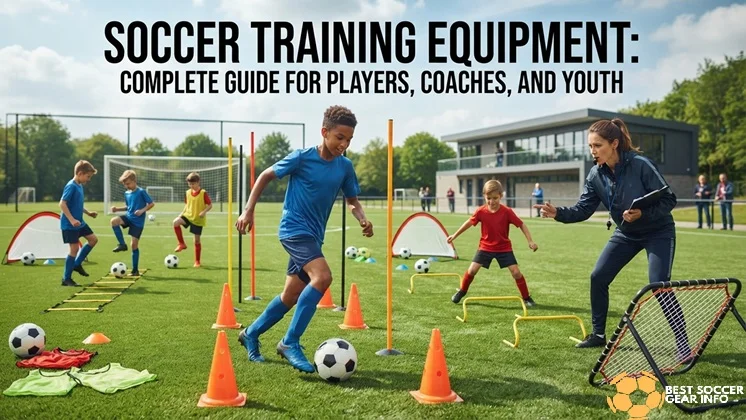
Soccer training equipment includes the balls, goals, cones, rebounders, agility tools, targets, hurdles, and other training aids used to develop soccer skills. The right equipment depends on the player’s age, training objective, available space, and whether the session is for individual, team, goalkeeper, indoor, or outdoor training.
You do not need a large collection to train effectively. A soccer ball, cones, and a suitable training area can support many fundamental drills. A goal, rebounder, or specialized training aid can then be added when a specific skill requires it.
What Is Soccer Training Equipment?
Soccer training equipment is a collection of tools designed to help players practice technical, physical, and position-specific aspects of the game.
It can support:
- Ball control and first touch
- Dribbling
- Passing
- Shooting and finishing
- Agility and footwork
- Coordination
- Reaction skills
- Goalkeeping
- Small-sided games
- Position-specific training
Some equipment is designed for individual practice, while other equipment is more useful for coaches, teams, academies, and professional training environments.
Soccer Training Equipment List
A useful soccer training equipment list includes both basic and specialized equipment.
| Equipment | Main Training Purpose | Typical Users |
| Soccer balls | Passing, shooting, dribbling, control | All players |
| Training cones | Dribbling, movement, marking areas | Players and coaches |
| Training goals | Shooting, finishing, small-sided games | All levels |
| Mini goals | Small-sided games and shooting | Youth and adults |
| Rebounders | Passing, receiving, first touch | Solo players and teams |
| Agility ladders | Footwork and coordination | Youth and adults |
| Training hurdles | Movement and coordination | Youth and adults |
| Training poles | Dribbling and movement | All levels |
| Agility rings | Footwork and movement | Youth and adults |
| Training mannequins | Passing, dribbling and shooting around obstacles | Teams and coaches |
| Shooting targets | Finishing accuracy | Players |
| Ball carts and bags | Ball storage and transportation | Coaches and teams |
| Goalkeeper gloves | Goalkeeping practice | Goalkeepers |
| Goalkeeper training aids | Handling, reactions and saves | Goalkeepers |
| Electronic training equipment | Reaction and performance feedback | Advanced users |
The right combination depends on what the player is trying to practice.
Essential Soccer Training Equipment
Soccer Ball
The soccer ball is the foundation of soccer training. Players use it for passing, receiving, dribbling, shooting, juggling, first-touch work, and finishing.
The appropriate ball size depends on the player’s age and the requirements of the relevant competition or training program.
For most players, regular practice with a suitable ball is more important than owning numerous specialized training products.
Training Cones
Cones are among the most versatile pieces of soccer training equipment.
They can be used to:
- Create dribbling courses
- Mark distances
- Set passing gates
- Define training areas
- Create movement patterns
- Organize small-sided drills
- Mark starting and finishing points
A single set of cones can be reused for many different exercises.
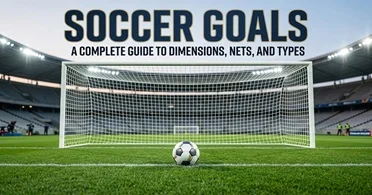
Training Goals
Training goals provide targets for shooting, finishing, passing, and small-sided games.
Common types include:
- Portable goals
- Pop-up goals
- Mini goals
- Small-sided goals
- Larger training goals
Portable and mini goals are particularly useful for individual practice and backyard training because they generally require less space than full-size match goals.
For more information, see our guide to soccer goals.
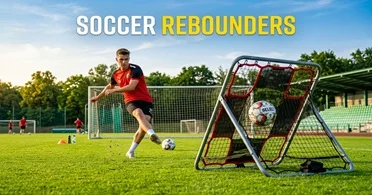
Soccer Rebounder
A soccer rebounder is a framed net that returns the ball toward the player.
It can help with:
- Passing
- Receiving
- First touch
- Ball control
- Volley practice
- Reaction exercises
A rebounder is particularly useful for solo training because the player can receive the ball back without needing another person to make every pass.
Agility Ladder
An agility ladder provides marked spaces through which players move their feet in different patterns.
It can be used for footwork, coordination, warm-ups, and movement drills. It is a training aid rather than a replacement for soccer-specific work with the ball.
Training Hurdles
Small hurdles create obstacles for movement and footwork exercises.
They can be incorporated into:
- Agility drills
- Coordination exercises
- Warm-ups
- Footwork patterns
- Movement sessions
Training Poles
Training poles create visual markers and obstacles for movement and dribbling exercises.
Players can dribble around poles, move between them, or use them to create structured training patterns.
Soccer Training Equipment by Age and User
The same basic equipment can serve different players, but the setup should be adapted to age, experience, training goals, and group size.
Youth and Kids
Soccer training equipment for youth should be appropriate for the player’s age, size, skill level, and training environment.
A basic youth setup can include:
- Age-appropriate soccer ball
- Cones
- Mini goal
- Rebounder
- Agility rings
- Low hurdles
- Training poles
For younger children, training can emphasize ball familiarity, basic movement, dribbling, passing, and simple shooting activities.
| Equipment | Example Use |
| Soccer ball | Kicking, dribbling and control |
| Cones | Simple dribbling courses |
| Mini goal | Shooting and scoring |
| Agility rings | Footwork activities |
| Low hurdles | Movement exercises |
| Rebounder | Passing and receiving |
| Training poles | Dribbling around obstacles |
Equipment should be stable, suitable for the activity, and used in an appropriate training area.
Adults
Soccer training equipment for adults can include the same fundamental items, with additional equipment added according to training objectives and experience.
A typical individual setup might include:
- Soccer ball
- Cones
- Rebounder
- Portable goal
- Training poles
- Agility ladder
- Hurdles
- Shooting targets
- Position-specific training aids
Players training alone can particularly benefit from rebounders, targets, and portable goals because these provide repeatable practice opportunities.
Coaches and Teams
Coaches generally need equipment that can organize activities for multiple players.
A coaching setup can include:
- Soccer balls
- Cones and marker discs
- Training goals
- Training poles
- Hurdles
- Agility ladders
- Mannequins
- Rebounders
- Ball bags or carts
- Training bibs
- Coaching boards
The amount required depends on team size and how the training session is structured.
Professional and Advanced Training
Professional soccer training environments may use the same basic equipment as recreational players while adding specialized equipment for structured sessions and performance feedback.
This can include:
- Professional training goals
- Mannequins
- Rebounders
- Shooting targets
- Specialized agility equipment
- Goalkeeper equipment
- Ball carts
- Electronic training systems
The presence of advanced equipment does not eliminate the need for fundamental ball work.
Soccer Training Equipment by Training Goal
Different equipment serves different training purposes.
| Training Goal | Useful Equipment |
| Ball control | Soccer ball, rebounder, cones |
| First touch | Rebounder, ball-return equipment |
| Passing | Rebounder, passing gates, targets |
| Dribbling | Cones, poles, mannequins |
| Shooting | Goals, shooting targets |
| Finishing | Goals, targets, mannequins |
| Agility | Ladders, hurdles, rings, cones |
| Coordination | Ladders, rings, hurdles |
| Goalkeeping | Goals, gloves, rebounders, reaction aids |
| Solo training | Rebounder, goal, cones, targets |
Dribbling
Cones, training poles, marker discs, and mannequins can create obstacles that players navigate while controlling the ball.
A simple cone course can provide basic practice, while more complex setups can introduce changes in direction and movement patterns.
Passing and First Touch
Rebounders and passing targets allow players to repeat passes and receive the ball repeatedly.
This makes them particularly useful when a player is practicing without a partner.
Shooting and Finishing
Portable goals, mini goals, larger training goals, and shooting targets can provide targets for finishing practice.
The appropriate goal depends largely on the available space and the type of exercise.
Agility and Footwork
Agility ladders, hurdles, rings, cones, and poles can organize movement and footwork exercises.
For soccer-specific training, these exercises can be combined with ball work and changes of direction.
Goalkeeping
Goalkeepers have additional equipment requirements because their training includes skills that differ from those of outfield players.
Common goalkeeper equipment includes:
- Goalkeeper gloves
- Training goals
- Rebounders
- Reaction equipment
- Cones
- Hurdles
- Training poles
- Rebound nets
- Goalkeeper-specific targets
These tools can support work on handling, movement, reactions, positioning, distribution, and shot stopping.
Soccer Training Equipment for Home, Backyard, and Indoor Training
The available training space often determines which equipment makes sense.
Home and Backyard Training
A practical home setup does not need to be complicated.
For many players, a:
soccer ball + cones + rebounder + portable goal
can support a wide range of individual exercises.
For backyard training, consider:
- Compact goals
- Flat cones
- Small rebounders
- Short training poles
- Low hurdles
- Agility rings
Measure the available space before purchasing large equipment. Also consider the playing surface and whether the equipment is designed for it.
Indoor Soccer Training Equipment
Indoor soccer training equipment should fit the available space and be appropriate for the indoor surface.
Useful options include:
- Soccer ball
- Flat cones
- Agility ladder
- Agility rings
- Low hurdles
- Small rebounder
- Mini goal
- Indoor training targets
For smaller spaces, equipment that folds, rolls, or stores easily can be more practical.
| Equipment | Why It Can Work in Small Indoor Spaces |
| Flat cones | Easy to place and store |
| Agility ladder | Rolls up for storage |
| Agility rings | Easy to rearrange |
| Small rebounder | Supports solo passing |
| Mini goal | Requires less space |
| Low hurdles | Useful for footwork |
Only use equipment where the facility and surface are suitable for the activity.
Solo Soccer Training
Solo soccer training equipment allows players to practice without a coach or training partner.
Useful options include:
- Rebounder
- Portable goal
- Cones
- Training poles
- Shooting targets
- Ball-return systems
A rebounder or ball-return system can be particularly useful when the exercise requires repeated ball contact.
Electronic and Advanced Soccer Training Equipment
Electronic soccer training equipment can add technology-based feedback or interactive exercises to a training session.
Depending on the system, features may include:
- Timers
- Sensors
- Light-based targets
- Reaction targets
- Movement tracking
- Performance measurements
- Connected applications
These systems may be useful for players who want more interactive or measurable training.
They are not required for fundamental soccer practice. Players can work on many core skills with a ball, cones, a goal, and a suitable training area.
Soccer Training Equipment Kits
A soccer training equipment kit combines several training products into one package.
A typical kit may contain:
- Cones
- Agility ladder
- Hurdles
- Training poles
- Agility rings
- Carrying bag
Some kits may also include balls, goals, or other training aids.
Before buying a kit, check the actual number, dimensions, materials, and intended use of each included item rather than relying only on terms such as “complete” or “professional.”
Soccer Training Equipment Prices and Budget Options
Soccer training equipment prices vary considerably according to equipment type, size, construction, brand, quantity, and intended use.
A basic setup using a soccer ball and cones can be relatively simple, while large goals, specialized rebounders, and electronic systems can require a substantially larger budget.
Instead of looking only at the price, consider:
- What skill does the equipment train?
- How often will it be used?
- Is it appropriate for the player’s age?
- Does it fit the available space?
- Can multiple players use it?
- Is it easy to store?
- Does it require additional equipment?
Cheap Soccer Training Equipment
Players on a budget can start with:
- Soccer ball
- Cones
- Small goal or target
- Rebounder
An agility ladder or training poles can be added later if they address a specific training need.
A larger equipment collection is not automatically necessary for productive practice.
How to Choose Soccer Training Equipment
The right equipment depends on the individual player and training situation.
1. Identify the Training Objective
Choose equipment according to the skill you want to practice.
- Dribbling → cones and poles
- Passing → rebounder and passing targets
- Shooting → goal and targets
- Agility → ladder and hurdles
- Goalkeeping → goalkeeper-specific equipment
2. Consider Age and Skill Level
Youth players may require equipment appropriate to their age and physical development. More experienced players may use additional specialized equipment.
3. Measure Your Training Space
Check the available area before buying goals, rebounders, or other large equipment.
4. Consider Indoor or Outdoor Use
Make sure the equipment is appropriate for the intended location and surface.
5. Decide Between Solo and Team Training
Solo players can benefit from equipment that returns the ball or provides independent targets.
Coaches generally need equipment that can be distributed across multiple stations or training groups.
6. Check Storage Requirements
Foldable, portable, or compact equipment can be useful when equipment needs to be stored after every session.
7. Consider Durability
Equipment used frequently by teams may need to withstand repeated setup, transportation, and use.
Common Mistakes When Buying Soccer Training Equipment
Buying More Equipment Than You Need
A large collection can increase setup and storage requirements without necessarily adding useful training opportunities.
Buying Without a Training Objective
An advanced-looking product is not automatically useful for every player. Start with the skill you want to practice.
Ignoring Available Space
Large goals and training systems may not be practical in a small backyard or indoor space.
Choosing Inappropriate Youth Equipment
Training equipment should be suitable for the player’s age, size, and activity.
Focusing Only on Technology
Electronic equipment can add feedback and interaction, but fundamental training still depends heavily on purposeful practice with the ball.
Soccer Training Equipment FAQs
There is no single piece of equipment that suits every player or training objective. A soccer ball, cones, and an appropriate goal or rebounder provide a foundation for many training activities. Additional equipment can then be selected for specific skills.
A basic home setup can start with a soccer ball, cones, and either a small goal or rebounder. Additional agility equipment can be added when space and training needs justify it.
Youth players can use age-appropriate soccer balls, cones, mini goals, rebounders, and simple agility equipment. The setup should match the player’s age, skill level, and training environment.
Cones, mini goals, appropriately sized soccer balls, rebounders, agility rings, low hurdles, and training poles can support children’s practice.
A rebounder, portable goal, cones, training poles, and shooting targets can support many solo exercises. Ball-return equipment is particularly useful when repeated passes or touches are required.
Cones, training poles, marker discs, agility gates, and mannequins can create dribbling courses and obstacles.
Agility ladders, cones, hurdles, rings, and training poles are commonly used for footwork and movement exercises.
Goalkeepers can use gloves, training goals, rebounders, reaction equipment, cones, hurdles, poles, and goalkeeper-specific training aids.
Yes, provided the equipment, activity, facility, and playing surface are appropriate. Compact equipment such as flat cones, agility ladders, rings, small rebounders, and mini goals can work well in limited spaces.
Prices vary by equipment type, size, construction, quantity, and complexity. Basic equipment can form a simple setup, while large goals and electronic training systems generally cost more.
Soccer training equipment is available through sporting-goods retailers, soccer specialty stores, online marketplaces, and equipment manufacturers. Compare dimensions, specifications, included components, intended use, and age suitability before purchasing.
Professional training environments can use specialized goals, mannequins, rebounders, agility equipment, goalkeeper equipment, and electronic systems. They also rely heavily on basic equipment such as soccer balls and cones.
Final Takeaway
Soccer training equipment ranges from basic soccer balls and cones to portable goals, rebounders, agility equipment, goalkeeper aids, training kits, and electronic systems.
For many individual players, a soccer ball, cones, and a goal or rebounder provide a practical starting point. Youth players can use age-appropriate equipment, while coaches, goalkeepers, and advanced players may require more specialized setups.
Choose equipment according to what you want to train, who will use it, where you will train, and how often the equipment will be used.